
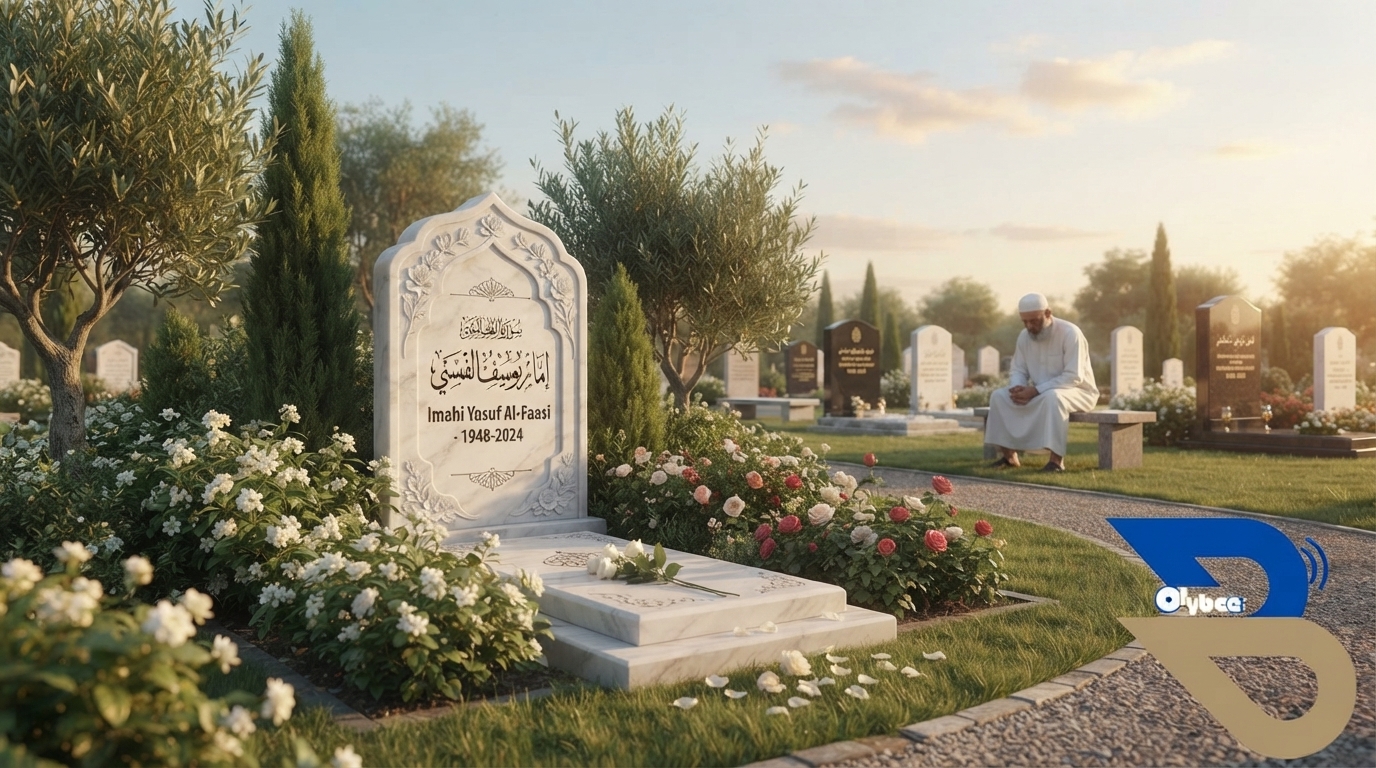


The death of Chief Imam Zibiri has plunged the Auchi Sacred Kingdom into mourning after his family confirmed the Islamic scholar’s passing this week. Alhaji Abdulmalik Zibiri, widely known by his popular name Mallam Megida, served as chief imam of Iyekhei in Edo State until his death.
According to the family’s statement, Zibiri passed away on Tuesday, July 14, 2026, and was buried the same day in line with Islamic burial rites. Given how quickly Islamic tradition requires burial after death, the swift funeral wasn’t unusual, yet it still meant many admirers only learned of his passing after the ceremony had already concluded.
Family Statement on Chief Imam Zibiri’s Death
The scholar’s relatives shared the news through an official statement that opened with a verse from the Qur’an: “Every soul will taste death. Then to Us you will be returned.” That verse, drawn from Surah Al-Ankabut, set a reflective tone for the announcement that followed.
Describing the loss as a moment of “profound sorrow,” the family nonetheless expressed complete acceptance of Allah’s will. Their statement read, in part, that Zibiri had “returned to his Creator” after serving faithfully as Chief Imam of Iyekhei within the Auchi Sacred Kingdom.
Beyond mourning, the family also used the statement to appeal for prayers. They asked Allah to forgive the late imam’s shortcomings, accept his good deeds, and grant him Al-Jannatul Firdaus, the highest level of paradise in Islamic belief. Additionally, they prayed for strength and patience for Zibiri’s family, the wider Muslim Ummah, and the people of Iyekhei as they process this significant loss.
A Difficult Week for Islamic Scholarship in Nigeria
Notably, Zibiri’s death arrived during what has already been a heavy week for Nigeria’s Islamic community. Just days earlier, on Thursday, July 9, Alhaji Jibril Baba Nnatakun, chief imam of Shonga, also passed away. Shonga sits within Edu local government area of Kwara State, a historic Nupe settlement positioned along the River Niger.
News of Nnatakun’s death drew swift reactions from Muslim faithful and prominent community figures, including Mohammed Baba Ibrahim, popularly known as MBI, a well-known political figure in Kwara North. Through his media team, MBI sent a formal condolence message to the Emir of Shonga, Alhaji Haliru Yahaya Ndanusa, alongside the Shonga Descendants Development Union and the broader Shonga Emirate.
In his tribute, MBI praised Nnatakun as a devoted scholar whose service to the community spanned several decades. He specifically highlighted the late imam’s humility and wisdom, noting that his consistent dedication to spreading Islamic teachings had earned him deep respect from both the emirate’s ruling class and everyday residents.
Earlier Loss: Sheikh Tijani Gbajabiamila
Even before these two losses, Nigeria’s Islamic community had already been grieving. Legit.ng had earlier reported the death of Sheikh Imam Tijani Olubodun Gbajabiamila, the Olori Ratibi of Lagos, who died at the Lagos State University Teaching Hospital.
His son, Ibikunle Lateef, confirmed the news through a Facebook post shortly after his father’s passing. Like Zibiri, Sheikh Gbajabiamila received a burial on the same day he died, at Iponri Central Mosque, following Islamic custom.
Why These Deaths Resonate Nationwide
Taken together, these three losses within roughly two weeks underscore just how central Islamic scholars remain to community life across Nigeria’s diverse regions, from Edo State in the south to Kwara in the north-central belt and Lagos along the coast. Each of these clerics held positions that extended well beyond religious ceremony alone. Chief imams often serve as mediators, educators, and moral anchors within their communities, meaning their deaths ripple outward far beyond immediate family and mosque congregations.
For residents of Iyekhei and the wider Auchi Sacred Kingdom, Zibiri’s passing marks the end of an era defined by decades of religious guidance. Community members are expected to continue offering prayers and tributes in the days ahead, following customs common throughout Nigeria’s Muslim communities whenever a respected scholar passes on.
As tributes continue pouring in from across Edo, Kwara, and Lagos states, the broader Muslim community appears to be leaning on shared faith and tradition to process what has become an unusually difficult stretch of loss.



Leave a Reply
You must be logged in to post a comment.