In the early morning of April 2, 2015, a chill ran down the spine of Washington D.C. An IT engineer at the Office of Personnel Management, or OPM, noticed something odd: government files, millions of them, were pouring out of the system. Names, Social Security numbers, security clearance files, even fingerprints-all compromised. Alarms would blare, but it was too late. More than 22 million personal records had been stolen from one of the most critical databases in the US government.
It wasn’t merely a data breach; it was one of the worst incidents in American history, with quiet investigations pinning the blame on state-sponsored hackers working for the Chinese government. This incident was a stark awakening, revealing a new reality: adversaries could strike deep into America’s heartland without ever setting foot on US soil. This is the story of the silent war Cyber Attack, where keyboards are weapons and information is the ultimate prize.
The Great Data Heist: OPM and the Dawn of Cyber Warfare
When the news broke in June 2015 that the Office of Personnel Management had been breached, the world gasped in disbelief. This wasn’t a heist for money; it was a raid for information. Names, addresses, background checks, contacts, medical histories—all belonging to every American who had applied for government clearance since 2000—had all been compromised. To put it in perspective, this breach affected roughly the population of Florida.
It was an attack clean, quiet, and massive, unfolding for more than a year before anyone noticed. When US authorities finally caught wind, China was the leading suspect. State-sponsored hackers had vacuumed up everything from Social Security numbers to lists of foreign contacts for CIA applicants. This could be used for blackmail or espionage, giving immense leverage to a foreign power. Even the FBI Director acknowledged, “It’s a huge deal.” The OPM hack sent Washington reeling, but beyond the political scandal, a deeper fear took root: what else had these hackers accessed? What other cyber soldiers were silently digging through America’s closets, undetected?
Spy vs. Spy in the Network: The US Counter-Offensive
The OPM breach exposed a new reality where nothing was safe. America, however, wasn’t just going to let it be. Across the Pacific, in Shenzhen, China, stood the towering headquarters of Huawei Technologies, a telecom giant connecting a third of the world’s people. For years, Huawei’s rapid rise had stoked suspicions in Washington: Was this company helping Beijing spy on other nations?
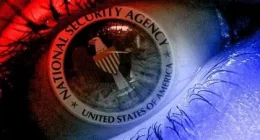
In 2014, an explosive revelation would provide an ironic twist: The NSA had already hacked Huawei first. The operation, codenamed “Shotgiant,” had the US National Security Agency infiltrate Huawei’s servers and quietly monitor communications of the company’s top executives. While the US was accusing China of espionage, it was already doing the same thing. This secret mission went even further: the NSA wasn’t just listening in; it was preparing to ride on Huawei’s technology like a Trojan horse, planning to exploit Huawei’s products to conduct surveillance on any country using them and even launch offensive cyber operations through those telecom networks. Or, in other words, the US had turned Huawei’s global footprint into a potential beachhead for American cyber forces.
All of this happened in utmost secrecy until Edward Snowden’s leaks pulled back the curtain. Beijing was furious: Chinese officials claimed that the NSA had carried out tens of thousands of attacks inside China, not just on Huawei but on universities and infrastructure. The message was clear: from Beijing’s viewpoint, the US was the aggressor in cyberspace, waging its own silent offensive. This tit-for-tat hacking created an atmosphere of mutual suspicion where every piece of hardware or software may be feared to be an adversarial covert agent. But the most dangerous hacks weren’t just stealing secrets; they were quietly wiring explosives into the systems we depend on to survive.
Targets Go Critical: The Threat to Infrastructure
Imagine waking up to find the power out, trains halted, and water taps running dry-not because of a hurricane or earthquake, but because of a cyberattack. This is the nightmare scenario that officials on both sides of the Pacific have been quietly preparing for, and it’s not just imagination. In 2021, US investigators discovered a Chinese state-sponsored group, nicknamed “Volt Typhoon,” which had pierced deep into American critical infrastructure. They didn’t wreak chaos, at least not yet. They just stayed there, silent observers, mapping everything. According to the FBI, Chinese government-linked hackers have “burrowed into US critical infrastructure” and are waiting “for just the right moment to deal a devastating blow,” as Director Christopher Wray warned.
This campaign has even targeted 23 natural gas pipeline operators in the US. The message is clear, China wants the power to shut down US infrastructure whenever it wants. The US believe this cyber pre-positioning is a playbook to deter America from intervening in a potential future conflict.
For its part, China also accuses the US of planting malware inside Chinese systems. While concrete details remain classified, many experts assume that US Cyber Command and the NSA have planted their sleeper programs in foreign infrastructure, including China’s, as a form of deterrence. It’s a mutual standoff, really, with each side signaling to the other, “We could disrupt your society if we wanted.” All this raises the stakes monumentally. Hacking into a company’s database in search of secrets is one thing; it is quite another to hack into a dam or a hospital. A cyberattack on critical infrastructure could instantly put lives at risk, for example, by knocking out emergency services or contaminating a water supply.
The Battle for AI and Silicon: The Future of Power
This silent war isn’t just about sabotage; it’s about who controls the future, and that means two things: Artificial Intelligence and semiconductors. On one front, hackers are going after AI research like modern-day industrial spies. In 2024, a US AI company was hit with a phishing attack aimed at stealing its research, carefully targeted by a Chinese-linked hacking group. The reason is simple: whoever controls the best AI can dominate everything from finance to drones to military tech.
But the espionage cuts both ways. Chinese tech companies and research labs worry that American hackers might sabotage their progress or steal their breakthroughs. Western intelligence officials, meanwhile, warn that China is using AI to enhance its hacking – automating attacks and sifting through stolen data at colossal scale. FBI Director Wray remarked that China has a bigger hacking program than that of every other major nation combined and warned that AI tools could supercharge this threat.
Then there’s the battle over microchips
The tiny brains that run our phones, computers, and advanced weapons. Modern AI and military technology requires state-of-the-art chips, and in this, the US has sought to maintain an edge through outright denial. In 2022, Washington imposed broad export bans to block the sale of top-level chips and chip-making gear to China, with the goal of trying to hold back Beijing’s technological ascent. That has made China even more determined to develop – or steal – semiconductor know-how by whatever means available, sometimes through legitimate investment, other times by outright theft. In 2018, US prosecutors indicted a Chinese state-owned company, alleging it conspired with employees to steal designs for advanced memory chips from Micron Technology, an American firm-a brazen case of economic espionage.
Chinese efforts have also reached overseas. In early 2023, a Dutch semiconductor equipment maker, ASML, disclosed that a China-based employee had misappropriated proprietary information about its chip fabrication technology. That’s significant, because ASML’s machines are crucial to producing the world’s most advanced chips, and China has been unable to get them owing to export restrictions. It’s a high-tech cat-and-mouse game: for every restriction or security measure, there seems to be a hacker or insider trying to beat it.
Flashpoint Taiwan: The Epicenter of the Cyber Conflict
All the while, Taiwan looms large in the background of the chip war. Taiwan manufactures over 60% of the world’s semiconductors and more than 90% of the most advanced chips, much from one company: TSMC, nicknamed the “silicon shield” of Taiwan. The US and China both know that whoever controls cutting-edge chip manufacturing holds a powerful advantage.
This is one reason the US has pushed to move some chip production stateside and to protect Taiwan’s autonomy. Any conflict over Taiwan would probably begin with a blitz of digital strikes-a form of shock and awe to jam communications and knock out critical systems. The risk is not confined to military targets: In a fully realized cyber war, ordinary citizens could find themselves in the dark, both literally and figuratively, as power grids fail, news networks go down, and electronic-warfare fog obscures what is really happening. Taiwan is a microcosm of the greater US-China hacker war: high stakes, high tech, and high tension, all centered on a 14,000-square-mile island.
Incidents like these have happened
As hackers defaced public displays in Taiwan during times of tension, denouncing political leaders. Every day, Taiwan is bombarded with more than 2 million cyberattacks, most of them originating from China, using phishing emails, system hacks, and attacks on government websites. It’s nonstop. Why the focus on Taiwan? Because Taiwan is at the center of the US-China rivalry. Beijing claims the island of Taiwan as its territory and has threatened to take it by force, while the US has signaled it would help Taiwan defend itself. Should hostilities ever break out, cyberattacks would be the first line of attack: cut the lights, cut the communication, sow chaos. Hackers have already shown their hand with bursts of attacks during political flare-ups.
The United States is probably upgrading Taiwan’s cyber defenses and preparing its digital tactics. Leaked information and hints from officials suggest that the US has implanted malware in certain Chinese systems as a form of deterrence, signaling to China that if Taiwan were attacked, China’s mainland infrastructure could face retaliation in kind. According to American intelligence, that campaign aligns with China’s plans to deter US intervention in Taiwan. It’s chilling logic: If China makes a move on Taiwan, it might simultaneously trigger cyberattacks aimed at slowing down the US response by causing turmoil stateside. Thus, Taiwan’s fate isn’t about ships and planes but is about networks and malware. And the question isn’t whether the US and China are in a hacker war but is how long it can stay in the shadows. When the lights go out, the war will already be here, and this one could affect us all.
Conclusion
April 2, 2015, was an otherwise quiet morning that heralded a new era in global conflict. The OPM data breach, revelations of the US counter-offensive against Huawei, and the persistent threat to critical infrastructure laid the reality of cyber warfare bare. Technological supremacy, including in AI and semiconductors, has become inextricably linked with national security in a battle that is continuous. Taiwan remains the central flashpoint in the ongoing digital struggle because of its critical role in the world’s chip production. This rash of escalating cyberattacks-both real and pre-positioned-points to a mutual standoff between the superpowers of the world, which for some has taken on a very chilling dimension. This is a war that does not take place with bombs, but with code, and it is happening now, every day, in the shadows of our hyper-connected world-a potential shared fate for one and all.