
 English


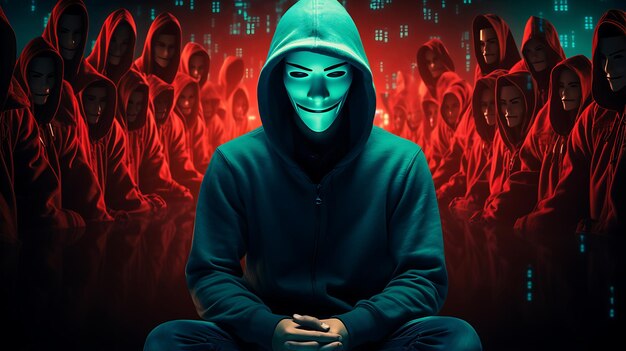


The Lone Hacker Who Crippled North Korea’s Internet: A Story of Cyber Vengeance


North Korea’s entire internet infrastructure vanished offline in January 2022. The reality was more personal than anyone could have imagined. A single disgruntled hacker was behind the digital blackout known only as P4X.
The Mysterious Blackout: January 2022
In a stunning turn of events, one of the world’s most isolated nations suddenly vanished from the internet. Without warning, North Korea’s handful of official websites and online services went dark. Initial theories suggested an act of retaliation for the latest missile tests ordered by Kim Jong Un, with many assuming that the disruption was caused by a major government or intelligence agency. The scale and precision were so great that it suggested a highly coordinated operation at the state level.
A Personal Vendetta: Motivation by P4X
The genesis of P4X’s audacious act traces back a year earlier to January 2021. An American cybersecurity researcher, P4X received what appeared to be an offer of a new hacking tool. Curiousity made him open the file in a secure virtual machine and narrowly avoiding disaster. Days later Google published a blog post revealing that North Korean hackers were targeting Western security researchers with booby trapped files. P4X then realized he was part of a broader campaign by Pyongyang’s operatives to steal valuable hacking tools and vulnerability research.
Stunned, feeling personally attacked, P4X expected swift action from the U.S. government. Instead, the FBI just took his statement and offered no follow-up, no aid in securing his systems, no apparent retaliation against the hackers. As weeks turned into months of silence, P4X’s frustration festered into resentment. “There’s really nobody on our side,” he concluded bitterly. Exposed to a nation’s spies with no protection, a seed of an idea began to grow: if authorities wouldn’t avenge this breach, maybe he would.
Pyongyang’s Digital Achilles’ Heel
And so, P4X started gathering intelligence in secret; the hunted became the hunter. A target was set: North Korea’s internet. What he found shocked him. Unlike other developed countries, North Korea’s presence online was minuscule and incredibly fragile. It was a house of cards digitized by outdated software and careless security. Only a handful of networks and a few dozen websites served the entire nation. To any seasoned hacker, this was a treasure trove of unlocked doors.
P4X discovered a slew of vulnerabilities-not even new ones, but known flaws that North Korean sysadmins had never bothered to patch. Older, hole-ridden versions of Apache and Nginx web servers provided open doors. It was as if North Korea had left the front gates wide open. The revelation just encouraged P4X more. What had started to seem at least possible now felt necessary: a solo counterattack against the most isolated regime on Earth.
Plotting Payback: A Surgical Strike
By the end of 2021, P4X’s mind was made up: he would strike North Korea himself. He spent months methodically mapping their network, his confidence growing with every new discovery. Automation was the key: he wrote custom scripts designed to scan North Korean servers, identify live targets, and then strike them with exploits in order to overload or crash them. This would be a denial-of-service attack-technically, a DDoS-but one conducted with surgical precision, a digital guerrilla war.
To protect his identity, P4X took on the nom de guerre “P4X” (rhyming with “Pax”), a mischievous play on imposing “peace through punishment.” Working under this name meant he could strike anonymously, never having to show either his real name or face. He knew the risks were enormous-serious legal trouble under hacking laws if caught and the possibility of North Korean reprisal if his identity was found out. Still, his resolve was firm.
The Cyber Attack: North Korea Goes Dark
In January 2022, P4X sat at his computer in a quiet Miami home, garbed in his signature t-shirt, pajama pants, and slippers. The code was loaded and targets were set. With a deep breath and a few keystrokes he was able to launch the attack. At first, it felt anticlimactic, just code running in the background. But as the hours passed, the news got better: one by one, North Korean servers stopped responding.
P4X watched as Air Koryo’s booking site, Naenara, the regime’s official web portal, and the state news site all went down. Across the world, anyone trying to access North Korea online saw nothing but error messages. North Korean officials suddenly found their external emails and web access cut off. The country had been knocked offline, not by a military strike, but by a lone hacker at his keyboard. P4X grinned. It was working, and nobody had a clue it was him.
The World Reacts: A Shadowy Spectacle
The blackout almost immediately drew the attention of intelligence agencies and cybersecurity researchers worldwide. Speculation ran rampant: Was it the U.S. Cyber Command? Or another state-backed hacking group? The timing, just after North Korea’s missile tests, fueled theories of a punitive cyber strike by a world power. However, North Korea’s government remained predictably silent, making no public admission of the ongoing disruption.
Inside North Korea, almost none felt the impact, since fewer than one percent of citizens have access to the global internet. The outages had mostly hit external propaganda sites and email servers used by the regime to disseminate information to audiences outside the country. On the streets of Pyongyang, life went on as usual, completely unaware of the cyber war going on. The blackout was embarrassing for the leadership, not a national crisis, yet in the global sphere, it was a cinematic mystery. P4X watched the guessing game unfold and was quietly satisfied. He did not want fame or credit at least not yet because being in the shadows kept him safe. And part of the satisfaction was the confusion of the world.
Beyond the Blackout: A Call to Hacktivism
Having proved that even a fortress-like regime could bleed in cyberspace, P4X decided he wouldn’t stop with temporary outages. He knew he had limits alone, so he quietly set up a covert website on the dark web, naming it “The Funk Project”-short for “FU North Korea.” It was a rallying call for other hacktivists to join his cause, declaring, “This is a project to keep North Korea honest.”
P4X plans to breach North Korean systems, dig up secrets, and expose sensitive information to the world. He reasons that North Korea’s regime commits outrageous cyberattacks and human rights abuses with impunity, and someone has to push back. “My conscience is clear,” he said with confidence adding that revealing Kim’s weakness and sending an explicit message was worth the risk.
Conclusion
The P4X story stands out as a reminder of how unpredictable the cyber warfare battlefield is today and how a single person can shame a nuclear-armed regime. It speaks to profound questions of vigilante justice in the Digital Age, government response, or lack thereof, to state-sponsored hacking and the price of such daring retaliation. His fight continues in the shadows, leaving a regime looking over its shoulder and the rest of the world wondering if they will strike again.
P4X stands unpunished, unidentified, and unbowed. The first shots of this one-man cyber war have been fired, demonstrating that one hacker in pajamas brought an entire regime to its knees. His fight still happens in the dark, hoping to shame U.S. authorities into recognizing the threat and protecting people like him next time around.

