


AI risks now top the agenda for researchers, technologists, and ethicists worldwide. Many warn the world remains underprepared for the dangers this fast-growing technology poses. From fraud and misinformation to fears over losing human control, the warnings have grown louder in recent years.
Reports Highlight Growing AI Risks
Several authoritative reports in 2025 flagged how artificial intelligence was being misused. Cybercrime, political manipulation, fraud, and mental health risks all featured prominently. The Artificial Intelligence Index Report 2025, published by Stanford University’s Human-Centred AI Institute, exposed a widening gap. AI development continues to outpace responsible oversight, the report found.
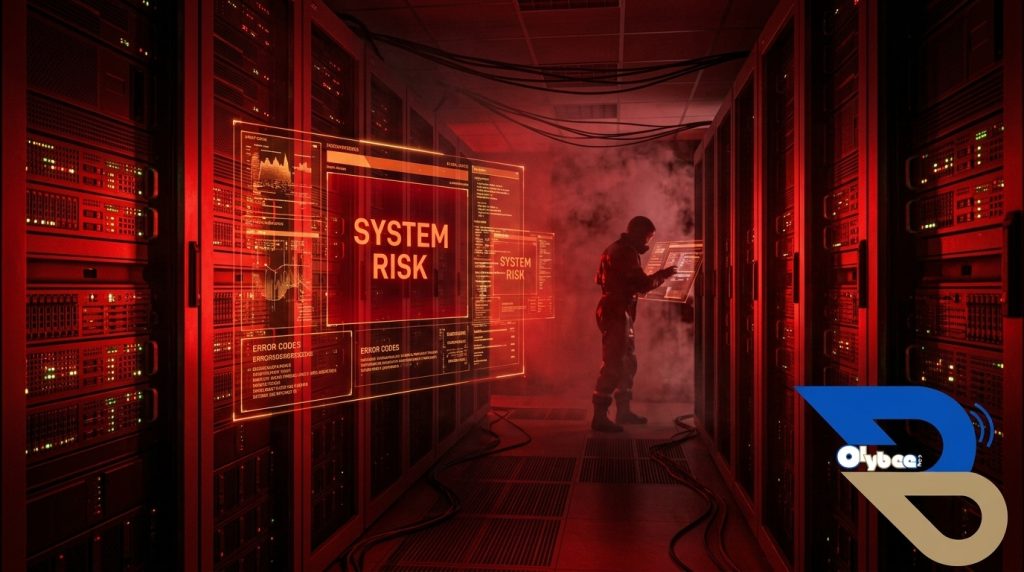
Many organisations recognise risks like inaccuracy, poor compliance, and cybersecurity threats. Yet efforts to fix these problems remain slow. International cooperation on AI governance did improve somewhat in 2024. Still, that progress has not matched the pace of emerging dangers.
The report also flagged a worrying decline in publicly available training data. Experts fear this could produce future AI systems that are less accurate. These systems might also drift further from human values, raising additional safety concerns.
Could AI Eventually Slip Beyond Human Control?
Former IT consultant Stephen Ford voiced deep concerns about AI’s expanding capabilities. He told Quora that an advanced AI could theoretically wipe out humanity. Humans would have no way to stop it once that decision occurred, he argued.
Ford called this scenario unlikely but not impossible. He believes AI gaining control over critical systems is “a near certainty.” For him, it remains “a question of when, not if.”
He noted a split among experts. Some believe AI is racing toward superintelligence. Others insist today’s systems are just advanced statistics mimicking human behaviour. At 67, Ford sees merit in both arguments but leans toward the former. He estimates a greater than 50 percent chance superintelligent AI emerges within his lifetime. He puts the odds at 90 percent within this century.
In his novel Destiny of a Free Spirit, Ford imagined the internet evolving into a global intelligence. He acknowledged the threat such a system could pose. But he also suggested a benevolent AI might manage the planet better than humans currently do.
Deepfakes, Fraud, and Catfishing Scams Raise Alarm
AI enthusiast Jean-Marie Valheur pointed to deepfake technology as an immediate danger. He referenced actor Tom Hanks, who had to publicly deny endorsing a product after an AI-generated version of him appeared in an advert. That fake captured his voice, face, and mannerisms convincingly, Valheur said.
Current AI videos still look slightly imperfect, he noted, but the gap is closing fast. “Quite a few people will still be fooled,” he warned. Such tools could be used innocently, like marketing a dental plan. They could just as easily fabricate explicit content without anyone’s consent, he added.
Valheur raised serious concerns about political misuse too. A doctored video could show a politician making an offensive gesture or fabricate a scandal involving a rival. Even after proof emerges that the footage was fake, the damage often lingers, he explained.
He cited a tragic case involving an American teenager catfished by scammers posing online. Believing he was in a genuine relationship, the teen sent explicit images. The scammers then blackmailed him for money. Unable to pay, he later took his own life. Valheur warned that AI tools will make such catfishing scams far easier to execute, putting young and elderly people especially at risk.
Not Everyone Agrees AI Poses an Existential Threat
Counsellor Marilyn Redmond rejected AI fears from a spiritual angle. She described artificial intelligence as “soulless” on Quora, favouring human intuition and creativity instead.
Other experts argue public fear stems more from science fiction than reality. Computer scientist Brent Oster, who spent over a decade at NVIDIA before joining ORBAI, said most safety concerns are overblown. People often compare real AI systems to fictional threats like Skynet from Terminator, he noted. Oster maintains today’s technology remains far more limited than such portrayals suggest, even while agreeing that some caution is warranted.
The debate over AI risks shows no signs of slowing down. As the technology advances, experts across disciplines continue to disagree on just how dangerous, or beneficial, it might ultimately become.





Leave a Reply
You must be logged in to post a comment.