


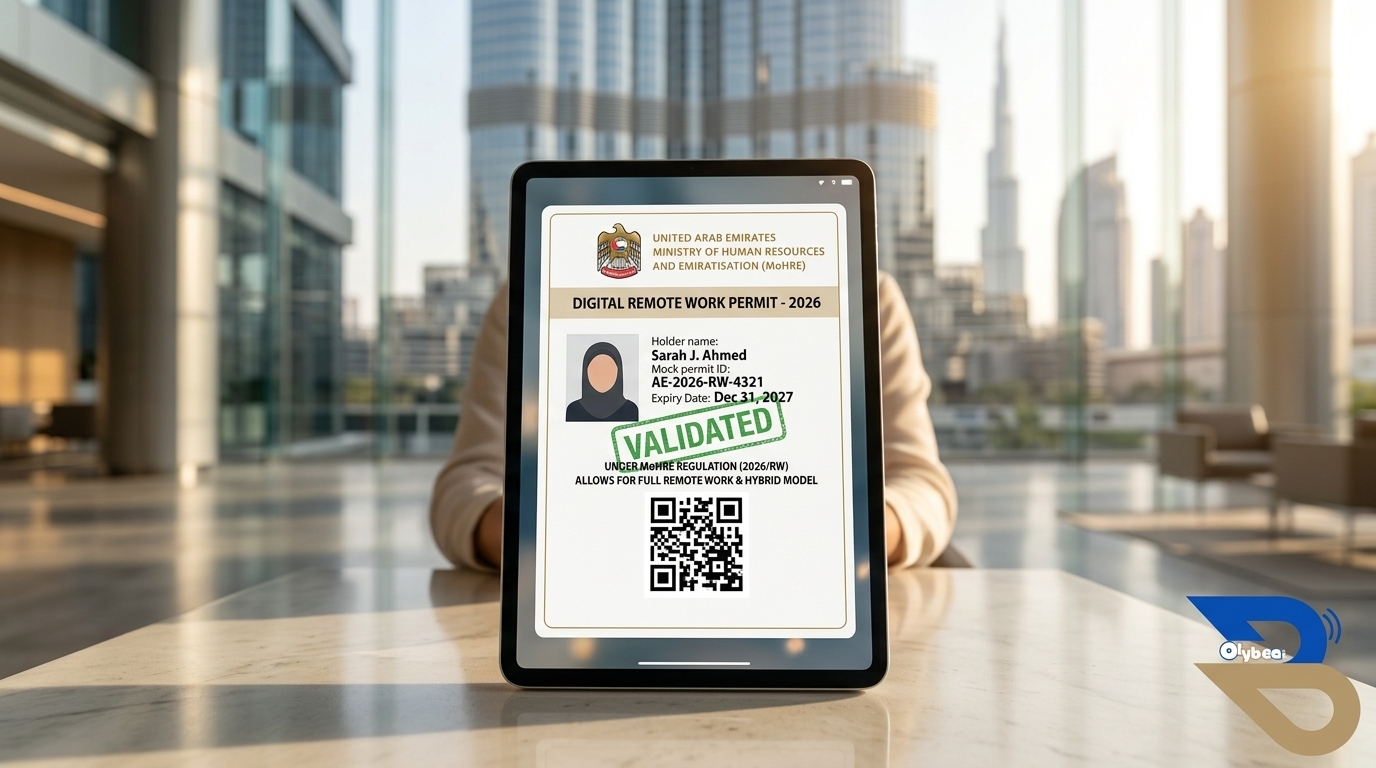

UAE remote work laws in 2026 give every employee working from home the exact same legal protections as those sitting in an office. Moreover, these rights cover everything — from working hours and leave to salary payments. So if your employer recently moved you to a work-from-home arrangement, the law firmly has your back.
Across the UAE, more businesses are encouraging remote work arrangements. This shift largely follows rising regional tensions. However, this change does not strip workers of any rights they previously held. Federal Decree-Law No. 33 of 2021 on the Regulation of Labour Relations governs all employment relationships in the UAE private sector. Consequently, remote employees stand on equal legal footing with in-office colleagues.
What UAE Remote Work Laws Say About Contracts
First and foremost, remote work must appear clearly in the employment contract. Without written agreement, the arrangement lacks legal recognition. Therefore, both parties — employer and employee — must document the terms either in the original contract or through a formal written amendment.
According to Article 5 of Cabinet Resolution No. (1) of 2022, remote work covers situations where “all or part of the work is performed outside the workplace, with electronic communication between the worker and the employer in lieu of physical presence, whether the work is part-time or full-time.”
So what exactly should a valid remote work contract include? Here is what UAE labour law requires:
- Full employer and employee details
- Job role and specific responsibilities
- Wages and payment terms
- Agreed workplace arrangements
- Working hours and leave entitlements
- Notice period and termination conditions
In short, if your remote work setup is not written down formally, it may not hold up legally. Always get it in writing before you begin working from home.

UAE Remote Work Laws on Hours, Salary, and Employee Rights
Now, here is where many workers get confused — they assume remote work changes their entitlements. It does not. Furthermore, Article 17(6) of the UAE Labour Law specifically addresses working hours for remote staff. As stated in the law, “if the employee wishes to perform his work remotely, whether inside or outside the State, with the approval of the employer, the latter may require specific working hours.”
In other words, employers can set defined work schedules for remote employees. Additionally, employees must get prior employer approval before switching to remote mode. So simply deciding to work from home without permission is not legally protected.
On the salary side, the rules are equally firm. Employers must pay salaries on time, provided the employee is ready and able to fulfil their duties remotely. The employment contract remains fully valid regardless of location. Therefore, no employer can legally withhold or delay pay simply because a worker operates from home.
Beyond pay and hours, remote workers in the UAE also retain these key protections under UAE labour law:
- The right to agreed salary, benefits, and incentives
- The right to regulated rest periods and leave
- The right to a reasonable and safe working environment
- The right to privacy, especially outside official working hours
- The right to clear performance expectations in writing
Additionally, workers have the right to set boundaries around after-hours communication. Employers cannot reasonably demand 24-hour availability simply because a worker is home-based.
How Remote Work Arrangements Benefit Both Sides
Interestingly, flexible work is not just good for employees. Employers also gain from it significantly. Lower overhead costs, access to a wider talent pool, and improved staff satisfaction are just a few advantages. Nevertheless, both sides must respect the legal framework to make it work sustainably.
According to Gulf News reporting on UAE remote work rights, five core legal rights protect every remote employee in the UAE. These rights ensure the home office does not become a legal grey zone for exploitation.
So, whether you are a Nigerian professional working in Dubai, a South Asian expat in Abu Dhabi, or a local UAE national clocking in from home — your rights remain intact. Furthermore, UAE remote work laws in 2026 make it clear that location does not diminish your legal standing as an employee.
If you are currently on a remote arrangement, review your contract carefully. Ensure the terms reflect what the law requires. And if something seems off, consult a certified labour lawyer or contact the UAE Ministry of Human Resources and Emiratisation for guidance.
Have questions about working abroad or expat rights? Stay with Olybee.com for the latest updates on work, travel, and life overseas.







Leave a Reply
You must be logged in to post a comment.