



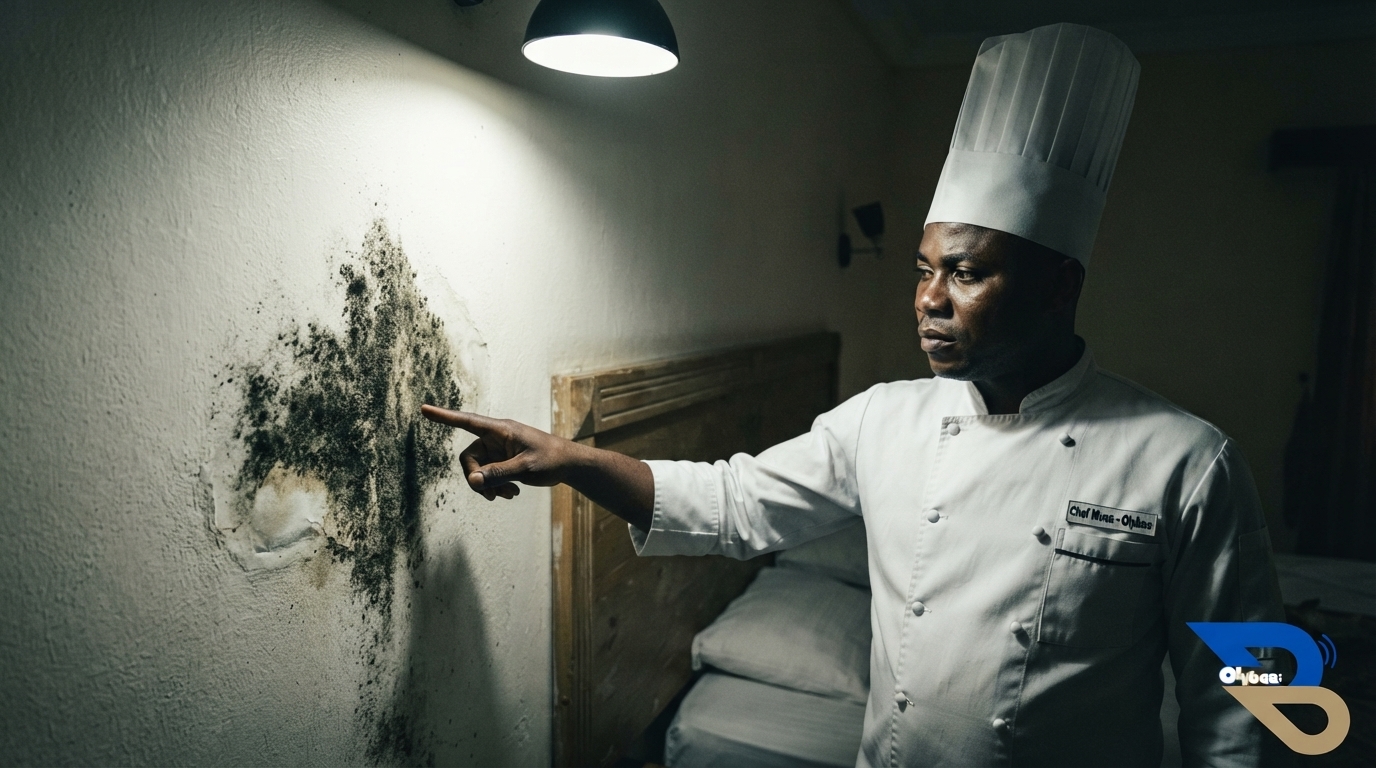
A Nigerian chef has sounded the alarm over mould, calling it a silent killer after he found the fungus growing inside his hotel room in Asaba. The chef, known on TikTok as @bavinskitchen, shared a video that quickly caught the attention of thousands of viewers online.
In the clip, he walked viewers through the corners of his hotel room, pointing at patches of mould creeping along the walls. He didn’t hold back on urgency. “Mold is dangerous please pay attention to your health,” he wrote in his caption, adding a light-hearted warning that people sometimes blame their struggles on spiritual attacks when the real culprit might be sitting quietly on their walls.
Why the Chef Calls Mould a Silent Killer
According to the chef, mould isn’t just an eyesore. He claimed it contributed to the death of someone he personally knew, someone who, in his words, had everything planned out for his future. That loss appears to be what pushed him to speak out so directly.
“This thing ended the life of somebody I know that had everything planned out for himself, and that is mold,” he said in the video. He went on to describe mould as a silent killer, explaining that many people underestimate how serious it can become once it settles into a home.
Still, he didn’t just raise alarm for the sake of it. He also offered a practical way forward, telling his audience that mould can be treated once discovered. His message was simple: don’t ignore it, and definitely don’t let it cost you your life.
Can Mould Really Be a Silent Killer? Here’s What Experts Say
So, is the chef’s silent killer claim backed by science, or is it more social media exaggeration? Based on information from Healthline, mould exposure rarely leads to death, though it can trigger serious health complications if left unchecked.
Because mould releases spores into the air, breathing them in can bring on asthma attacks, respiratory infections, and allergic reactions. This risk climbs sharply for people who already deal with lung conditions or have weakened immune systems. Meanwhile, in extremely rare situations, invasive mould infections can indeed turn fatal, which lends some weight to the chef’s warning, even if outright death from mould remains uncommon.
Consequently, health experts generally recommend swift action the moment mould appears, rather than waiting to see whether symptoms develop.
Nigerians React to the Mould Discovery
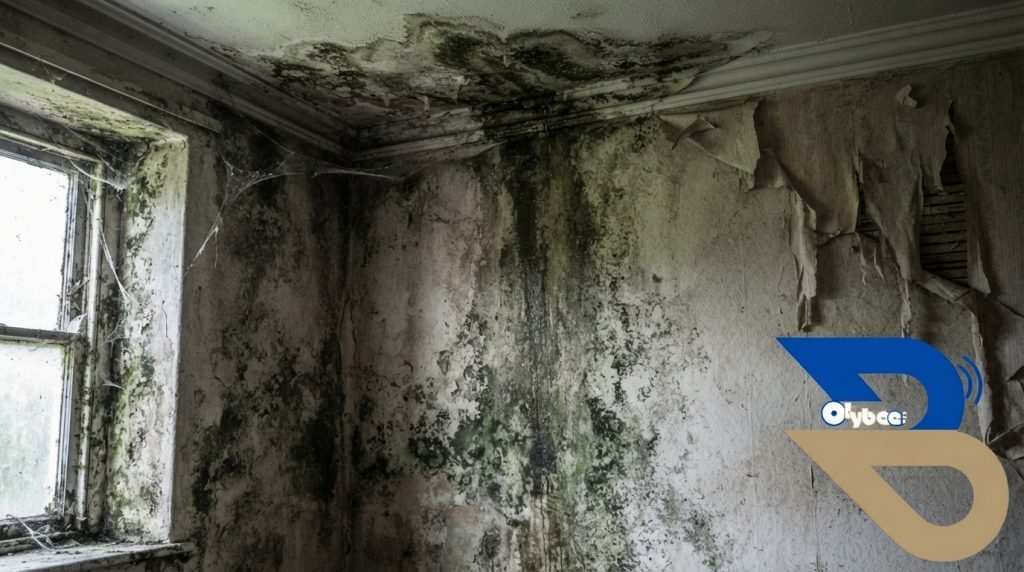
Once the video began circulating, reactions poured in from Nigerians who had their own encounters with household mould. One commenter, a nail technician based in Benin, initially wondered whether the growth stemmed simply from rain seeping through cold walls.
Another user, identified as Alubarika, cautioned people against panicking unnecessarily. Instead, she encouraged viewers to first understand the difference between everyday dampness and actual mould, since dampness often develops near bathrooms, external walls, or areas lacking a proper damp-proof course.
Meanwhile, a commenter named Anita Osei broke down the treatment process step by step. She explained that fixing the issue typically involves removing the plaster, drilling into affected blocks, injecting a chemical treatment, and then waiting several days before replastering and waterproofing.
However, not everyone found the fix so permanent. A user named SlimPearl mentioned that she had treated her own mould problem twice, only to watch it return within a few months. Another commenter, ADABUIFE, admitted she currently has no funds to deal with the mould disturbing her and is instead considering wallpaper as a temporary cover-up.
A Recurring Problem Across Nigerian Homes
This isn’t the first time mould has sparked concern among Nigerians online. In fact, Legit.ng previously reported a similar case involving a lady who discovered mould in her apartment after living there for three years. Her story, much like the chef’s, highlighted how mould can develop gradually and go unnoticed until it becomes a visible, worrying problem.
Separately, another Nigerian woman named Chiamaka expressed distress after finding mould near her bed, in an apartment she had only just moved into months earlier. She shared footage of the growth spreading along her bedroom wall, which resonated with many viewers who had faced comparable issues.
Together, these repeated cases suggest that mould exposure remains a fairly common yet often overlooked household hazard across Nigeria, particularly in humid regions or buildings with poor ventilation and drainage.
What Nigerians Should Take Away From This
For now, the chef’s message appears to be resonating widely, judging by how quickly his video spread. Whether or not mould was truly responsible for the death he described, his underlying advice still holds value: pay attention to unusual growths in your living space, and don’t dismiss health symptoms as unrelated when dampness or mould is present nearby.
Since mould thrives quietly in warm, humid corners, it’s easy to overlook until it becomes a larger issue. Therefore, regular inspection of walls, ceilings, and bathroom corners can go a long way toward catching early warning signs before they escalate.
Ultimately, this viral moment serves as a timely reminder that home maintenance isn’t just about appearances. Sometimes, it’s genuinely about safety.



Leave a Reply
You must be logged in to post a comment.