


The World Cup halftime show delivered one of football’s most talked-about entertainment moments this year, yet the biggest headline afterward wasn’t about the performance itself — it was about the paycheck nobody received. Sunday’s FIFA World Cup final made history by hosting its first-ever halftime spectacle, and now fans want answers about what the stars actually took home.
Burna Boy, Shakira, Madonna, BTS, and Justin Bieber all took the stage in a performance that reportedly captivated billions of viewers around the world. For many Nigerians, though, the standout moment belonged to Uganda’s viral dance troupe, the Ghetto Kids, who joined Shakira and Burna Boy for a rendition of “Dai Dai” that quickly spread across social media.
Why the World Cup Halftime Show Payment Structure Raised Eyebrows
So, how much did these global stars actually earn for headlining football’s biggest night? According to the Spanish outlet Marca, the answer mirrors how the NFL structures its own Super Bowl halftime show. FIFA reportedly covers all production and logistics costs for the performance. However, the artists themselves don’t receive a fixed fee for taking the stage.
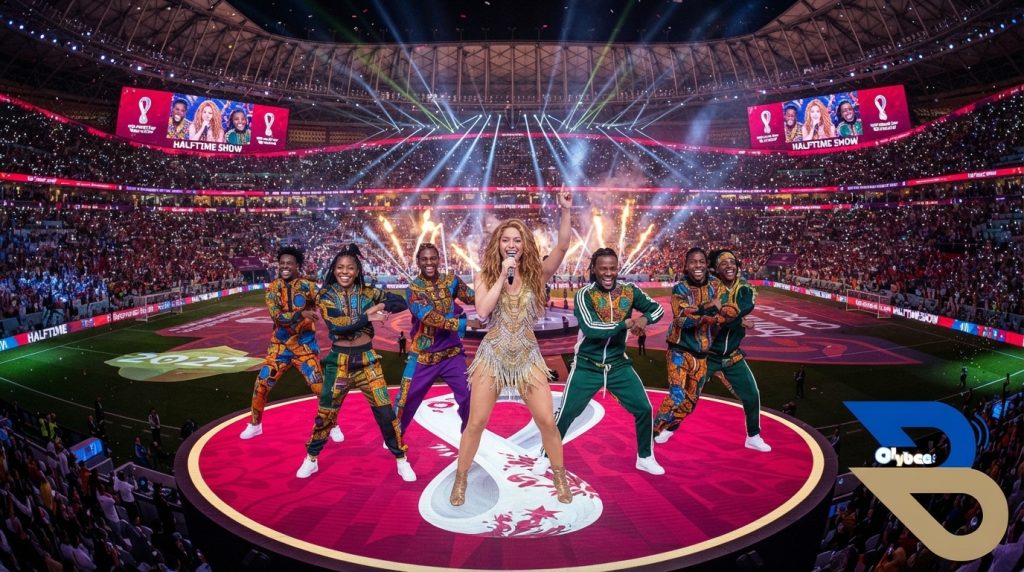
Instead, the real payoff comes in a different form entirely: exposure. Global visibility on this scale typically translates into spikes in streaming numbers, ticket sales, and fresh commercial deals in the weeks that follow. Essentially, the performance functions as a marketing platform rather than a paid gig.
That said, the arrangement isn’t entirely unpaid across the board. Artists such as Shakira, Madonna, BTS, and Justin Bieber reportedly receive a modest stipend during rehearsal periods. Even so, the actual performance on final night comes with no direct compensation attached.
The Ghetto Kids’ Surprising Situation
Unlike the internationally booked headliners, the Ghetto Kids weren’t contracted by FIFA at all. Shakira personally invited the Ugandan group to join her portion of the set, meaning any payment arrangement exists solely between the dance troupe and the Colombian superstar herself.
What makes their story even more striking is what happened after their performance ended. Despite dancing on football’s biggest global stage, the group revealed they didn’t even have tickets to watch the actual match. Speaking to MDMotivator on Instagram, they admitted, “We don’t know where we will go after the performance.”
That single line captures just how unpredictable life backstage at a mega-event can be, even for performers who just delighted a worldwide audience. Fame and visibility, it turns out, don’t automatically come with logistics support once the cameras stop rolling.
A New Blueprint for FIFA Entertainment
This year’s halftime show marks a genuine turning point for how FIFA approaches entertainment at its flagship event. By blending football with a full-scale musical production, the tournament borrowed a page directly from the Super Bowl playbook, an approach that has worked remarkably well for the NFL over the years.
For the artists involved, though, the real reward isn’t a wire transfer. Instead, it’s the chance to dominate global charts, headlines, and streaming platforms in the days and weeks following the performance. Given the sheer size of the World Cup final audience, that kind of visibility can be worth far more than any single appearance fee.
Meanwhile, Burna Boy has continued generating buzz beyond his own halftime performance. During rehearsals for the show at MetLife Stadium, Coldplay frontman Chris Martin reportedly praised the Nigerian star’s influence in the music industry, telling him, “Your musical stature is above my level.” Burna Boy, visibly caught off guard, laughed and quickly brushed off the compliment. The backstage exchange, captured on video, went viral almost immediately, adding yet another layer to an already unforgettable World Cup weekend for Nigerian entertainment.
Between the unpaid star-studded lineup, the Ghetto Kids’ uncertain post-show situation, and Burna Boy’s modest reaction to global praise, this year’s halftime show proved that history-making moments don’t always come with matching paychecks. For now, exposure remains the currency that matters most.
For more on the show’s broader context, see FIFA’s official World Cup coverage.



Leave a Reply
You must be logged in to post a comment.