
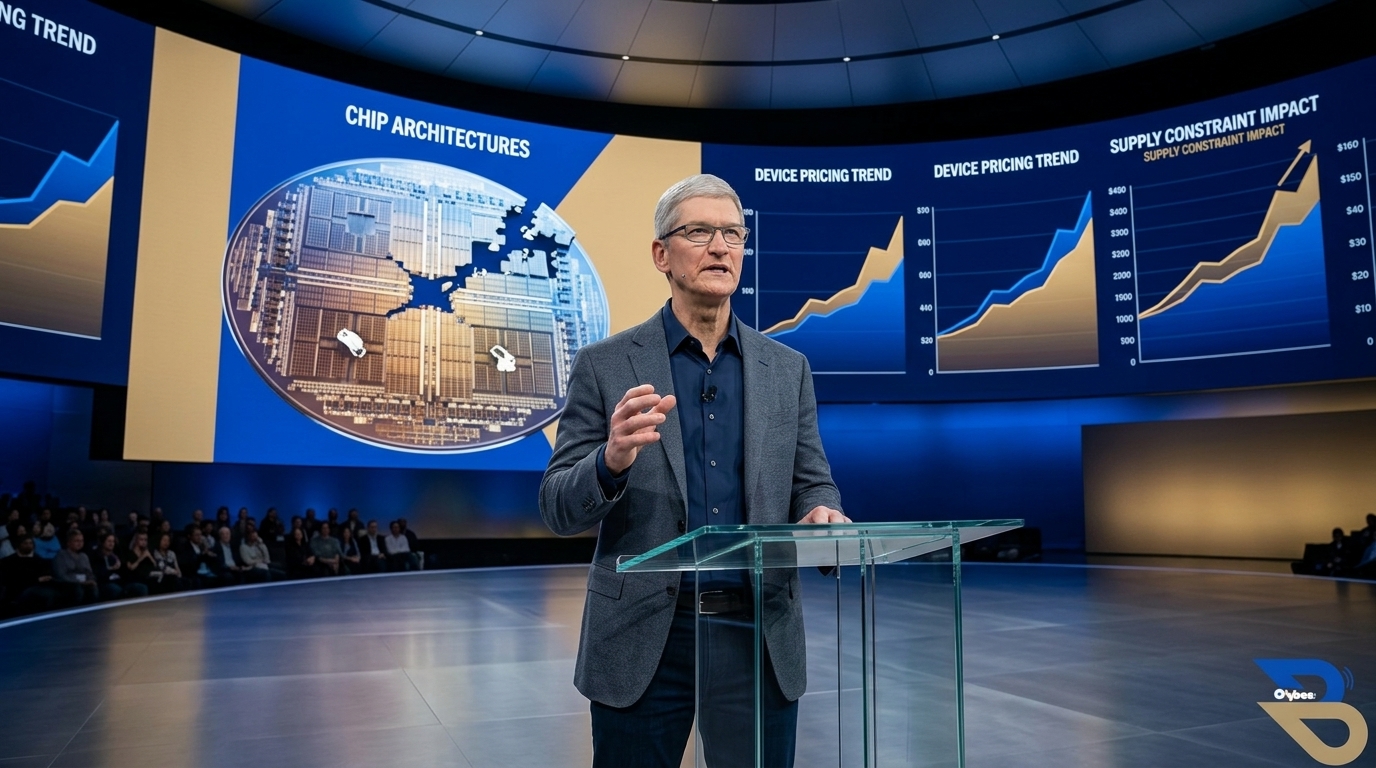



Apple is preparing for a price increase across its product lineup, and CEO Tim Cook says the company simply has no other choice. Soaring costs tied to memory and storage chips have squeezed the global electronics supply chain so hard that Apple can no longer absorb the impact on its own.
Cook addressed the situation directly in an interview with The Wall Street Journal. He explained that surging demand for memory chips, driven largely by the rapid expansion of AI data centers, has intensified competition for limited semiconductor supply. As a result, consumer electronics makers like Apple now find themselves fighting for the same limited pool of components that AI companies are buying up at record pace.
“Unfortunately, price increases are unavoidable,” Cook said. He added that Apple has tried hard to shield customers from the brunt of these cost increases, though that strategy has reached its limit. “We’re doing our best to mitigate the huge increases that are being passed to us, and we’ve been trying to shield our customers from the increases, but the situation has become unsustainable.”
Why Apple Price Hikes Are Becoming Inevitable
Both DRAM and storage markets are driving the pressure, according to Cook. Chip manufacturers, he explained, are increasingly diverting production toward high-bandwidth memory built specifically for AI infrastructure. Consequently, that shift leaves less supply available for everyday consumer devices like smartphones, laptops, and tablets.
“There’s less supply at a time when consumers want devices and the memory guys are passing along huge price increases,” Cook said. He stressed that Apple needs the broader memory market to stabilize before pricing pressure can ease. “We definitely need memory pricing and supply to return to reasonable levels for consumer products. That’s the bottom line.”
This isn’t just an Apple problem, either. Industry groups representing automakers, retailers, and electronics manufacturers have already warned that the ongoing memory chip shortage could trigger price increases across a wide range of consumer goods, not just smartphones. Additionally, these groups caution that the shortage threatens to disrupt global supply chains more broadly, extending well beyond the tech sector.
Leadership Transition Adds Context to Apple Price Hike Timing
Cook’s comments carry extra weight given his own situation. He is expected to step down as CEO in September and hand leadership over to John Ternus, meaning these pricing decisions will likely shape the company’s direction just as new leadership takes the reins.
Notably, Cook declined to specify which products would see price increases or how steep those changes might be. However, he did reference Apple’s upcoming product cycle, which reportedly includes a foldable iPhone alongside the iPhone 18 Pro and Pro Max, both expected to launch in September. Even so, he stopped short of directly linking the pricing strategy to those new releases.
On the question of solutions, Cook indicated that Apple is willing to use its considerable financial resources to help stabilize the supply of components. “We’re willing to use our balance sheet to help be a part of the solution,” he said, while emphasizing that expanding overall semiconductor manufacturing capacity remains the real long-term fix. Interestingly, though, he ruled out the idea of Apple manufacturing its own memory or storage chips, even though the company already has strong internal silicon design capabilities through its custom chip programs.
Cook also touched on policy matters, particularly restrictions affecting access to Chinese semiconductor firms. Rather than commit to a fixed stance, he suggested that all options should remain open. “Everything needs to be on the table,” he said, noting that supply strategies need broad and flexible evaluation given how unpredictable the chip market has become.
For now, consumers can expect higher prices on Apple devices in the coming months, though exact figures and timing remain unclear. As the global memory shortage continues reshaping the smartphone and PC markets, Apple’s situation offers a clear signal of how deeply the AI boom is now affecting everyday consumer technology.






Leave a Reply
You must be logged in to post a comment.