


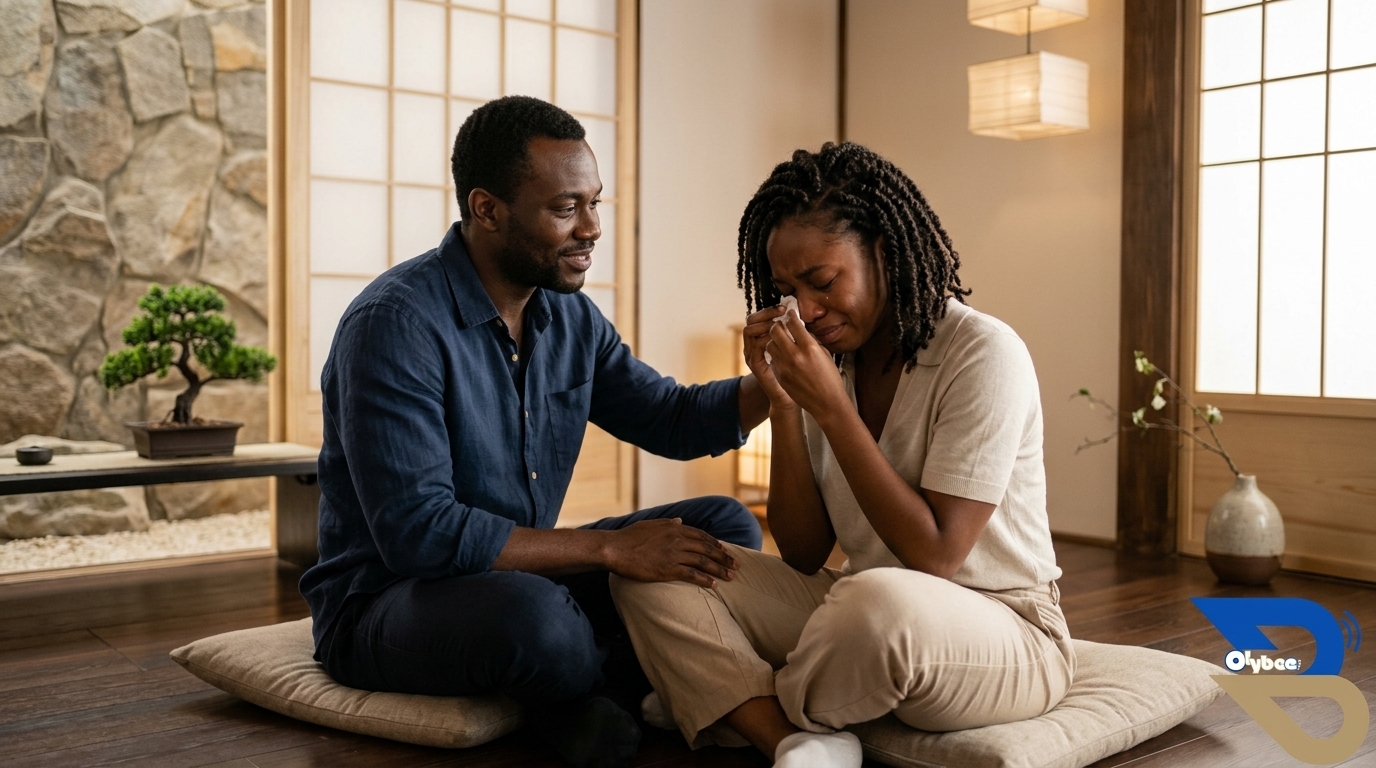

In Japan, you really can hire someone to cry with you. The practice, known as rui-katsu crying therapy, pairs people with trained companions who help them release pent-up stress through tears. Rather than romance, the goal stays simple. It creates a safe, judgment-free space to let emotions out. For many clients, that simple setup turns out to be surprisingly powerful.
The service most linked to this trend is called Ikemeso Danshi. The name roughly translates to “good-looking men who cry.” Companions arrive, queue up an emotional film, and sit beside the client as the tears start to flow. Afterward, they gently dab the tears away with a handkerchief and offer quiet words of comfort.
How Rui-Katsu Crying Therapy Works
Ikemeso Danshi began as an office-visit service in Tokyo. Originally called Ikemeso Takkyubin, or “Tear Couriers,” it sent attractive male companions straight to workplaces. There, clients and companions would watch sad videos together. Common themes included ailing pets or strained father-daughter relationships.
Early versions of the service offered around six companion styles to pick from. Choices reportedly included a dentist look, a brooding “bad boy” type, and a more intellectual persona. Clients simply chose whichever style felt most comforting for that day’s session.
Importantly, nothing romantic happens during a session. The companion’s job stays focused on empathy, not flirtation. He listens, watches the film alongside the client, and helps create space for honest emotional release. The approach, according to organizers, particularly appeals to women in high-pressure jobs who rarely get to show vulnerability at work.
Rui-katsu has since grown well beyond one-on-one office visits, too. It now includes public “crying workshops,” where groups gather specifically to cry together. Participants watch curated emotional content as a group, then discuss how they felt afterward.
This idea fits within a wider Japanese tradition, too. The country has long offered unconventional rental services, from professional friends to stand-in family members for special occasions. Rui-katsu, in many ways, simply applies that same idea to grief and stress relief.
Who Created Rui-Katsu Crying Therapy
Businessman Hiroki Terai developed rui-katsu back in 2013. The term itself translates to “tear-seeking” or “tear activity” in Japanese. Terai believes crying serves as a powerful, underused tool for stress relief.
Beyond the companion service, Terai has built a wider career around the idea. He has authored close to a dozen books on the topic. One photo collection, titled “Ikemeso Danshi,” features attractive men in tears.
Filmmaker Darryl Thoms documented the phenomenon in a short film called “Crying with the Handsome Man.” According to National Geographic, Thoms first learned about the concept through a quirky news clip years earlier. He then tracked down Terai himself to explore the idea on camera.
Thoms later noted that many busy professionals, especially women, lack a partner at home to “unload” daily stress onto. Rui-katsu, he suggested, fills that emotional gap for many clients. He also predicted similar services could spread elsewhere, as more relationships worldwide shift toward virtual, less physical connection.
The Science Behind Rui-Katsu Crying Therapy
So, does crying with a stranger actually help? According to Harvard Health Publishing, crying triggers the release of oxytocin and endorphins. These chemicals can ease both physical and emotional pain.
Emotional tears also carry stress hormones out of the body. Letting them flow, therefore, may genuinely lighten a person’s mood afterward. Research even suggests people cry more often than many assume. One set of studies found women average roughly three and a half crying episodes monthly, while men average under two.
That biological backdrop helps explain why rui-katsu crying therapy keeps finding new fans. Cultural pressure plays a role here too. Japanese workplaces often expect quiet composure, especially from women in demanding roles. As a result, many people simply lack a private outlet for built-up stress.
Japan’s shifting living patterns add another layer to the story. Roughly one-third of Japanese households now consist of a single person. Given that shift, services built around comfort and connection have grown more appealing over time
International media have covered rui-katsu repeatedly over the past decade, from short documentaries to magazine features. That steady attention suggests the appeal travels well beyond Japan’s borders. Coverage has spanned everything from lifestyle outlets to major broadcasters, often framing the trend as both surprising and oddly touching. Still, the core concept stays rooted in distinctly Japanese ideas about restraint and emotional control.
For now, rui-katsu crying therapy remains a small but steady niche within Japan’s broader wellness scene. Whether viewed as quirky or genuinely therapeutic, the message stays consistent. Sometimes, a good cry is exactly what people need. And occasionally, having someone there to share it makes all the difference.






Leave a Reply
You must be logged in to post a comment.