
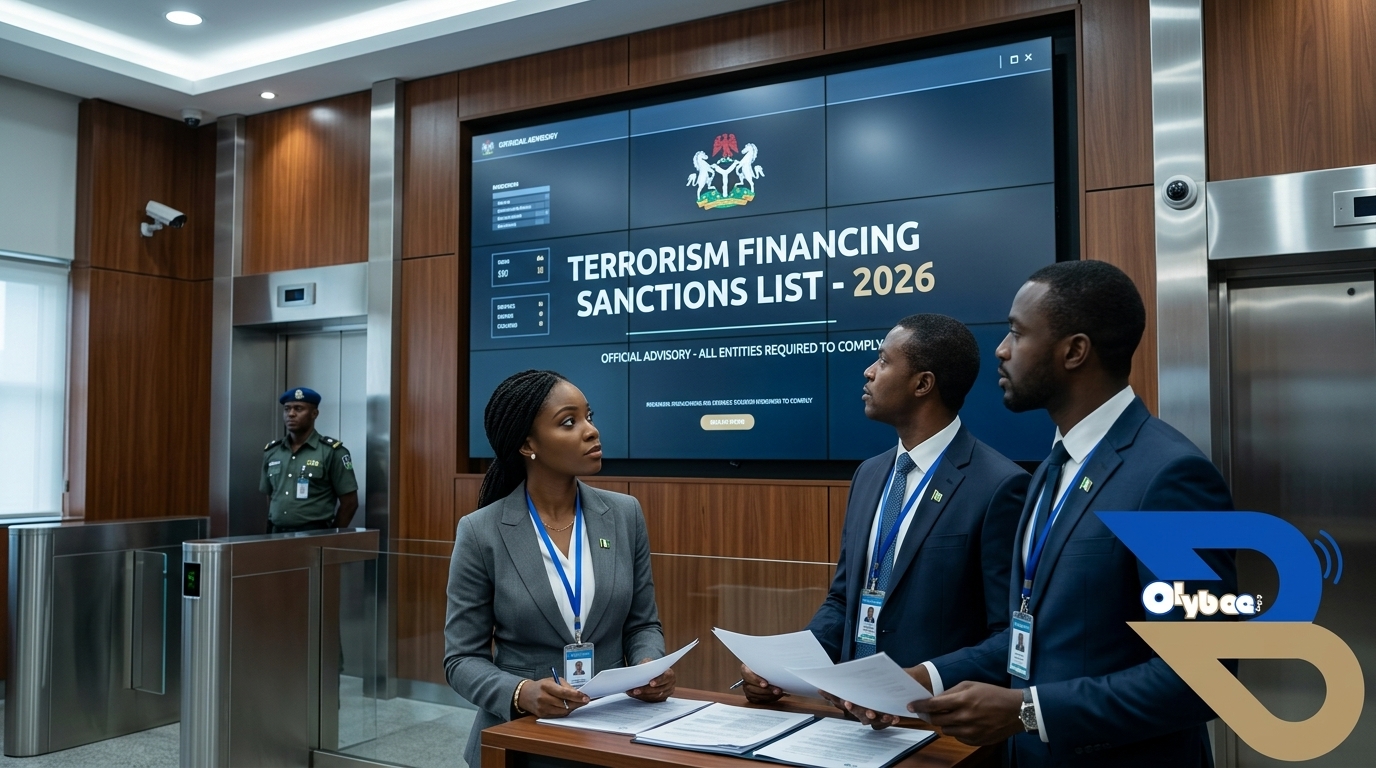


Nigeria’s Federal Government has publicly identified nine persons and entities sanctioned for terrorism financing, in one of the most detailed anti-terror financial disclosures the country has made in recent years. The announcement, confirmed by the Nigerian Sanctions Committee, comes on the heels of parallel action by the United States government — and it puts both individuals and businesses squarely in the crosshairs of Nigeria’s financial enforcement machinery.
This is what we know about who made the list, why they were named, and what happens next.
Full List of Persons and Entities Sanctioned for Terrorism Financing
The Nigerian Sanctions Committee, through its Secretary Beatrice Jedy-Agba, confirmed that the updated sanctions list received government approval and official publication on June 18, 2026. The designations followed what Jedy-Agba described as “extensive intelligence gathering, financial investigations, and inter-agency assessments.” Authorities say those assessments produced reasonable grounds to conclude that all listed persons and organisations either supported, facilitated, or directly financed terrorist activities in Nigeria.
The six individuals named are:
- Ibrahim Yakubu Ogirima
- Muktar Muhammad Adamu
- Adamu Chiroma
- Ibrahim Abubakar
- Abdullahi Umar Usman
- Babangida Muhammed Adamu Hammajam
The three sanctioned entities are:
- Abbal Bako & Sons Bureau De Change Limited
- Generation Currency BDC Limited
- Nine to Nine BDC Limited
Notably, Muktar Muhammad Adamu and two of the BDCs — Generation Currency and Nine to Nine — were also sanctioned separately by the United States Treasury Department’s Office of Foreign Assets Control (OFAC). Washington designated them over alleged financial ties to the Islamic State West Africa Province (ISWAP). Nigeria’s decision to list the same individuals and firms essentially means both governments now coordinate pressure on the same targets — a significant show of transatlantic cooperation in counterterrorism finance.
Nigeria Directs Banks to Freeze Terrorism Financing Assets Immediately
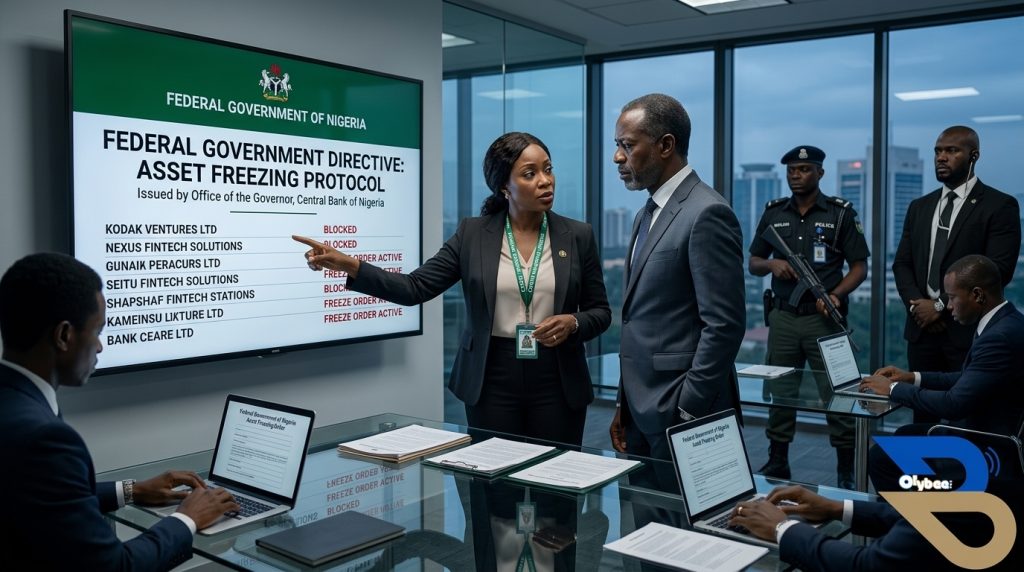
Beyond naming names, the Federal Government made it crystal clear that financial institutions must act — and act now. Jedy-Agba issued a firm directive calling on all banks, designated non-financial businesses, and relevant professions to implement the sanctions without delay. Specifically, institutions must freeze assets belonging to listed persons and entities, file Suspicious Transaction Reports where applicable, and report all relevant matches to the appropriate authorities.
“The Federal Government reiterates its directive to all financial institutions and designated non-financial businesses and professions to continue to comply with all sanctions obligations, including asset-freezing requirements, the filing of Suspicious Transaction Reports and the reporting of all relevant matches to the appropriate authorities,” the statement read.
This is not a suggestion. Under Nigeria’s counterterrorism financing framework, non-compliance by financial institutions carries serious legal consequences. Therefore, banks, Bureau De Change operators, and other designated businesses face real pressure to act swiftly upon receiving this directive.
Additionally, the government reaffirmed its broader commitment to cutting off financial pipelines that sustain terrorist groups. Officials stressed that neither local nor international actors will find a safe channel for moving terror-related funds through Nigeria’s financial system.
US and Nigeria Align Against ISWAP Financial Networks
The timing of these designations is telling. The US move against Muktar Muhammad Adamu formed part of a wider global crackdown on ISWAP’s financial networks across West Africa, the Middle East, and Europe. Nigeria’s own list — published before Washington’s announcement — shows Abuja had already been building its case independently. Consequently, the convergence of both lists signals coordinated strategy rather than coincidence.
US Secretary of State Marco Rubio also weighed in earlier. He acknowledged growing cooperation between American and Nigerian security agencies against terrorism. Moreover, Rubio confirmed this partnership had already produced significant breakthroughs against the Islamic State group in the region.
ISWAP — a splinter faction of Boko Haram — has driven some of the deadliest attacks across Nigeria’s northeast. Over the years, the group developed sophisticated methods for moving money through informal financial channels, including Bureau De Change operators. By targeting BDCs directly, both Nigeria and the US are striking at the logistical machinery that keeps the group funded and operational.
As of this report, none of the named individuals or entities has issued any official response. However, the law demands immediate compliance from all financial institutions holding assets tied to those on the list. Non-compliance carries serious legal consequences under Nigeria’s counterterrorism financing framework.
For deeper context on how designation processes work, the US Treasury’s OFAC provides detailed public guidance. Nigeria’s obligations also align with global standards set by the Financial Action Task Force (FATF).
The disclosure of these nine names marks a clear escalation. With American backing behind the same designations, financial pressure on ISWAP’s support networks is now tighter than ever.


Leave a Reply
You must be logged in to post a comment.