




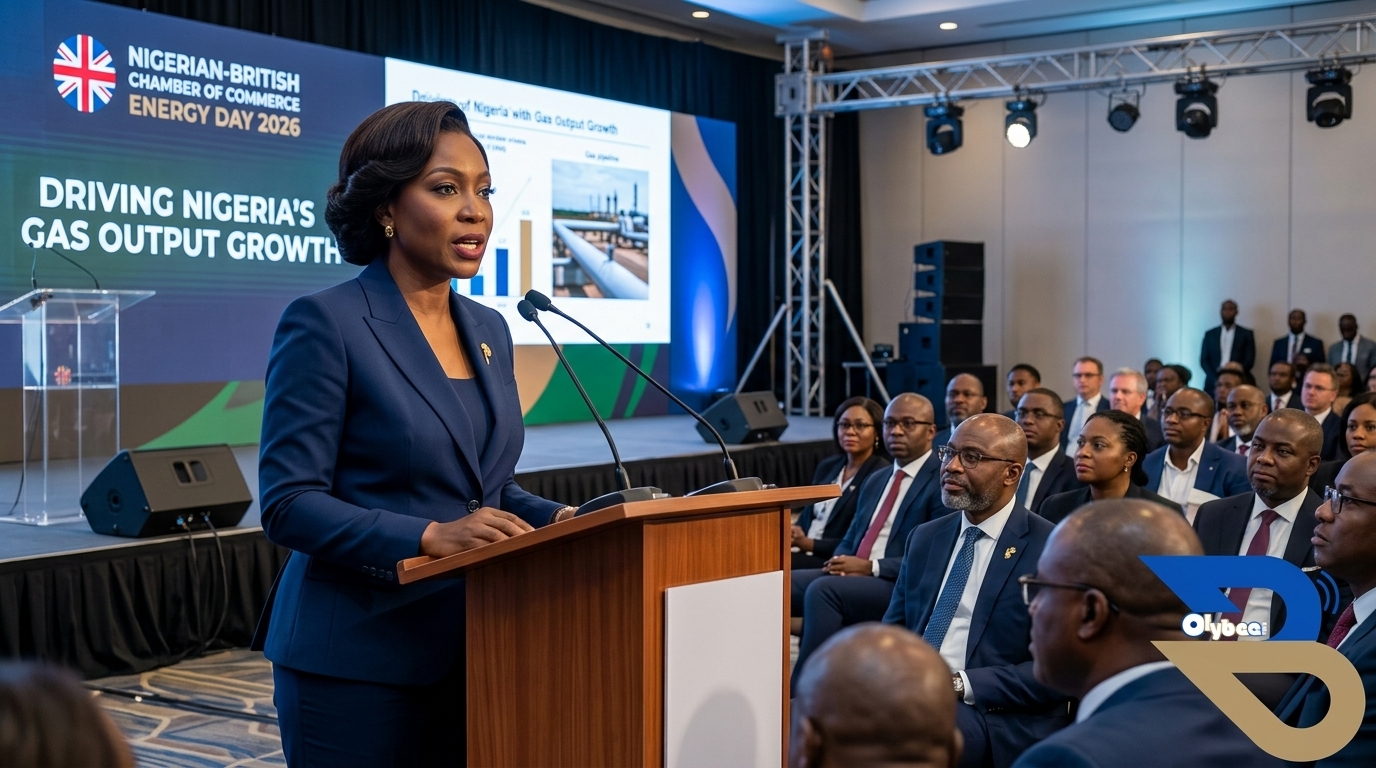
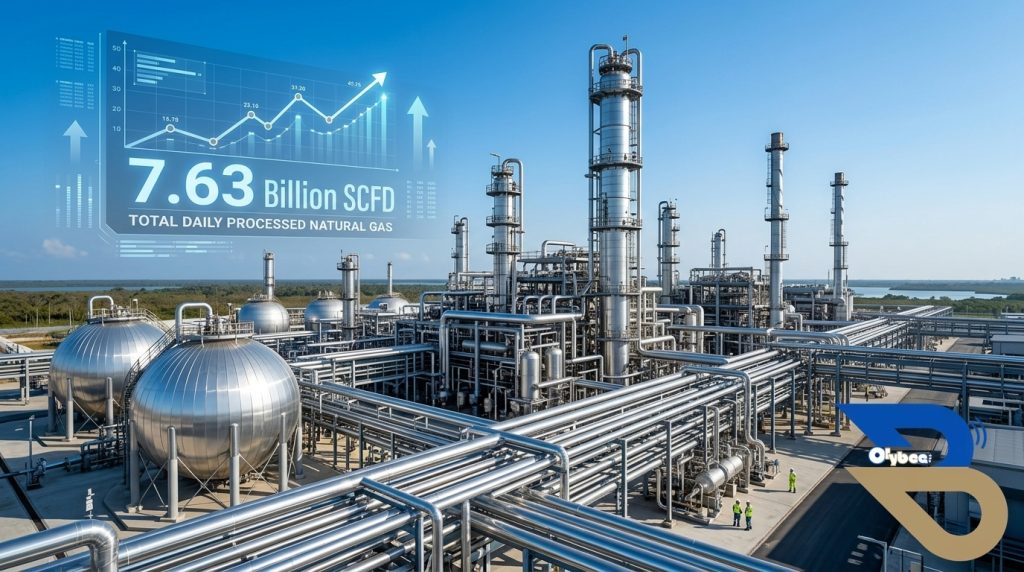
Nigeria’s gas output has surged from 6.83 to 7.63 billion standard cubic feet per day — and that jump happened in just two years. The Presidency confirmed this milestone on Tuesday. Special Adviser to the President on Oil and Gas, Mrs. Olu Verheijen, shared the figures publicly. She spoke at the Nigerian-British Chamber of Commerce Energy Day 2026, held recently in Lagos. A text of her presentation reached the News Agency of Nigeria on Tuesday.
Verheijen also confirmed that Nigeria’s proven gas reserves now exceed 215 trillion cubic feet. That figure places Nigeria firmly among the most gas-rich nations on earth. However, large reserves alone do not guarantee economic progress. The business environment must work — and according to Verheijen, it now clearly does.
What Is Driving Nigeria’s Gas Output Growth?
So, what exactly changed? Verheijen pointed squarely to targeted presidential directives. Specifically, these directives improved conditions for deep-water development, non-associated gas, and midstream infrastructure. Additionally, the government redirected over $4 billion in international oil company divestments. Those funds moved directly toward deep-water and integrated gas projects. That alone represents a major shift in how the sector allocates capital.
Contracting speed has also transformed dramatically. Previously, contracting cycles in Nigeria stretched as long as 36 months. Now, the average cycle runs at around 14 months. Furthermore, the government is actively targeting a six-month turnaround. That kind of efficiency signals a fundamentally improved business environment. And serious capital always follows efficiency.
Indeed, the investment response tells the story plainly. Nigeria’s share of African upstream Final Investment Decisions jumped from roughly 4% in 2023 to approximately 40% across 2024 and 2025. As a result, about $10 billion in new commitments landed in the sector. Additionally, an estimated $500 billion in forward investment is now visible in the pipeline.
Several long-stalled projects also restarted. Bonga North, Ubeta, and HI gas developments are now moving again. Moreover, new non-associated gas projects provide anchor supply for Nigeria’s LNG export chain. “When Nigeria improves the rules of the game, capital returns to the field,” Verheijen noted.
For broader context on African upstream investment trends, the African Energy Chamber’s annual State of African Energy report offers detailed, data-driven sector analysis.
Nigeria Gas Output as a National Development Engine
Beyond the raw production numbers, Verheijen made a broader strategic argument. This energy sector is not simply a commodity export platform — it is a foundation for national development. The Tinubu administration does not treat gas as a mere transition fuel. Instead, the government frames it as a development fuel. That distinction carries real and significant policy weight.
In practice, gas underpins a wide range of critical economic activities. These include power generation, fertiliser production, petrochemicals, clean cooking solutions, CNG transport, LNG exports, and manufacturing. Together, these sectors form the backbone of Nigeria’s long-term industrial base. Furthermore, developing them at scale creates durable domestic employment across the country.
“The goal is not simply to produce more gas,” Verheijen stated. “It is to ensure Nigerian gas becomes Nigerian power, Nigerian products, Nigerian jobs and Nigerian exports.” She also added: “A nation does not grow wealthy by owning resources. It grows wealthy by converting them into value.”
Consequently, measuring sector success by volume alone misses the deeper point. The more meaningful question is how much of Nigeria’s gas converts into domestic economic value — and that, Verheijen argued, is precisely where policy focus now sits.
Fixing Power Sector Debt to Unlock the Gas Value Chain
Increasing gas production is one challenge. Getting paid for it has historically been quite another. For years, power sector arrears piled up steadily. Gas producers regularly went unpaid, and that environment understandably choked off fresh investment across the board.
The Tinubu administration moved to fix this problem head-on. The Federal Executive Council approved the Presidential Power Sector Debt Reduction Programme. This bond initiative carries a total ceiling of N4 trillion. Specifically, its purpose is to settle verified arrears owed to generation and gas companies across the sector.
Under the programme, generation companies signed full and final settlement agreements worth approximately N2.28 trillion. Investors then oversubscribed the N501 billion Series 1 bond, signalling strong market confidence in the reset. Payments to companies began flowing immediately after issuance. Moreover, a second bond series worth N729 billion will follow to complete the programme’s first phase.
Verheijen was careful and direct about the nature of this intervention. “This is not a bailout,” she said firmly. Instead, it serves as a strategic sector reset. The programme cleared verified arrears, restored liquidity, and gave operators a stable footing from which to invest confidently. That framing matters significantly for long-term investor trust.
For comparative global context on how power sector debt relief enables energy investment, the World Bank’s energy sector resource hub offers valuable analysis.
A Sector Firmly Turning a Corner
Nigeria’s gas output numbers are genuinely striking. The country added nearly 0.8 billion SCF/day in just two years. Its share of African upstream FIDs leapt from roughly 4% to approximately 40%. Stalled mega-projects are moving again. A N4 trillion debt programme is actively clearing old arrears. Furthermore, $500 billion in prospective investment now sits in the pipeline.
Still, challenges naturally remain. The six-month contracting target is ambitious. Payment discipline in the power sector needs long-term structural reinforcement — not just periodic settlements. And converting gas into domestic value at scale requires further reform across manufacturing, infrastructure, and regulation.
That said, the scorecard Verheijen presented at the 2026 Nigerian-British Chamber of Commerce Energy Day is credible and detailed. Nigeria’s gas sector is moving — and moving firmly in the right direction.





Leave a Reply
You must be logged in to post a comment.