

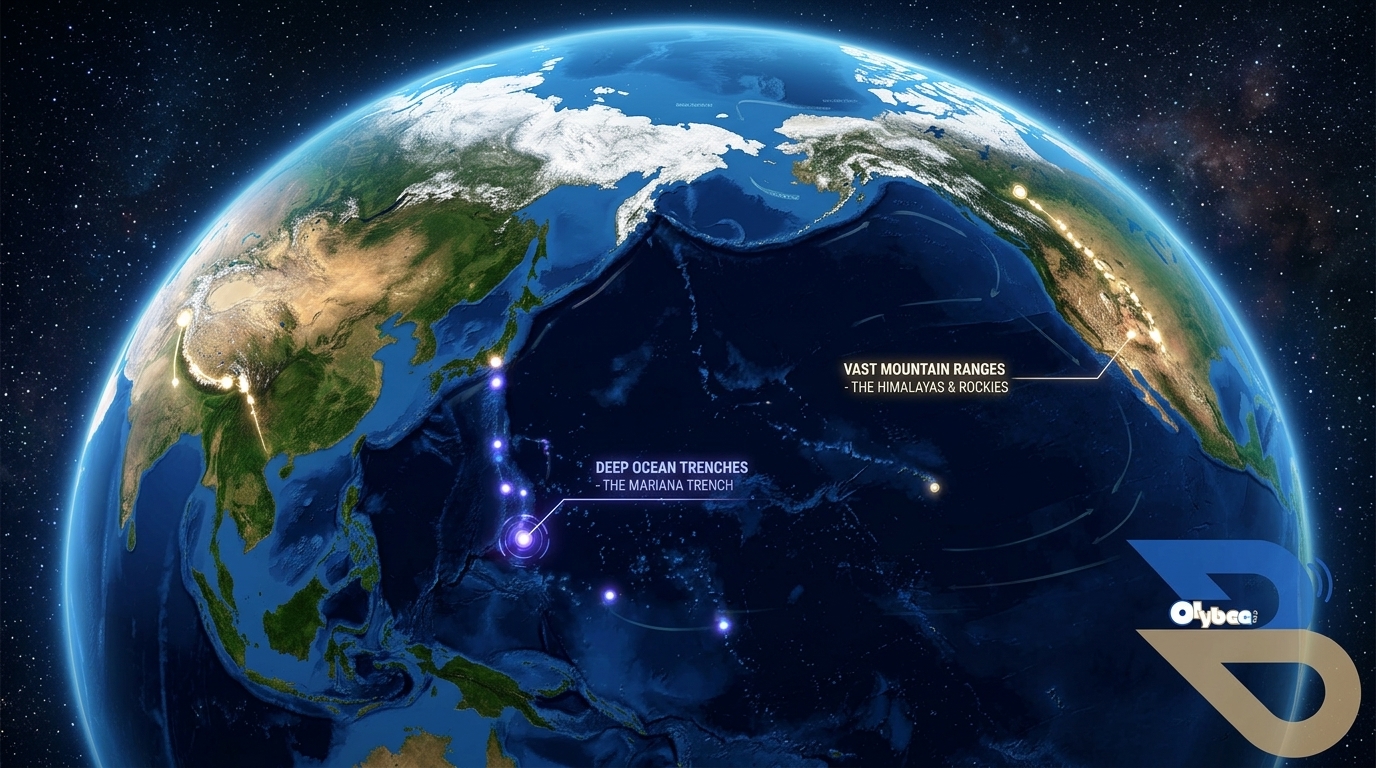


You probably think you know how the world is laid out — but these wild geography facts are about to flip that confidence on its head. From continents hiding underwater to countries that span more time zones than you can count, our planet is far stranger and more surprising than any textbook ever let on. Buckle up, because geography just got a whole lot more interesting.
Geography Facts That Challenge Everything You Thought You Knew
Let’s start with something that will genuinely hurt your brain. The world’s largest desert is not the Sahara. Surprise — it’s Antarctica. Antarctica covers about 5.5 million square miles (14.2 million square kilometers), dwarfing the Sahara’s roughly 3.5 million square miles. A desert, by definition, is simply a region that receives very little precipitation. Antarctica qualifies easily. Listverse
Now, here’s another one most people miss entirely. Alaska holds the unique distinction of being simultaneously the easternmost and westernmost state in the US. The 180th meridian — which marks the division between eastern and western longitudes — cuts right through the Aleutian Islands. So technically, part of Alaska sits on the eastern side of the globe. Wrap your head around that. Mental Floss
Meanwhile, consider Russia. Russia spans 17 million square kilometers — larger than Pluto’s 16.6 million square kilometers. It covers 11 time zones and is so vast you could fit the United States inside it nearly twice. And yet, despite that staggering size, Russia does not hold the world record for most time zones. That title belongs to France, which claims a whopping 12 time zones, largely because of its scattered territories around the globe. Unofficial NetworksMental Floss
More Geography Facts That Prove Earth Is Full of Surprise
Think you’ve heard it all? Think again. There is actually an island within a lake, on an island within a lake, on another island in the Philippines. Specifically, Vulcan Point sits inside Crater Lake, which rests on Taal Volcano Island, within Taal Lake, on Luzon Island. Nature apparently loves a geographic inception moment. Isolated Traveller
Here’s one for the record books. Canada holds the longest coastline in the world — stretching over 125,000 miles. To put that in perspective, that’s enough to wrap around Earth’s equator five times. No other country even comes close. Greenlight
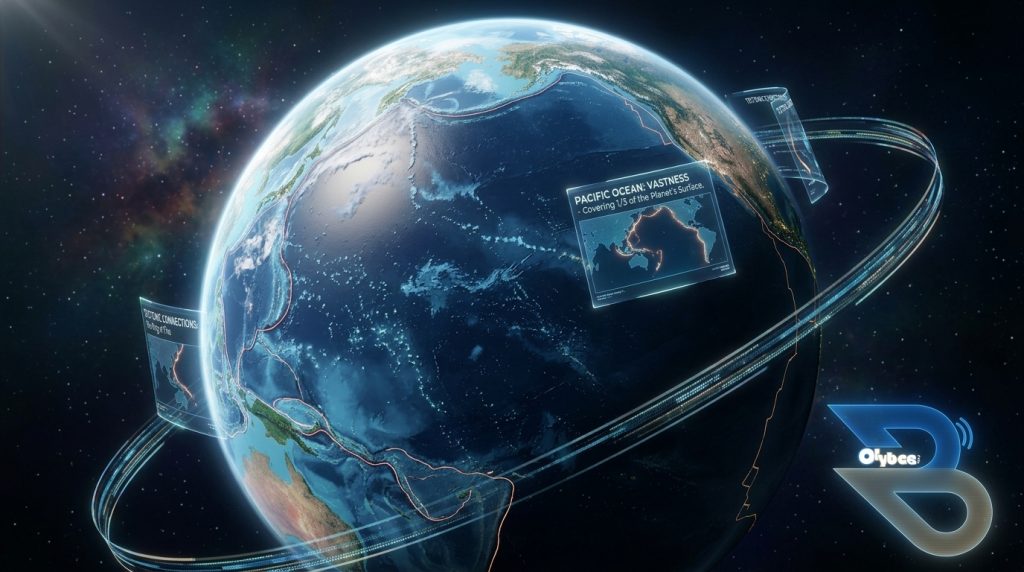
Then there’s the surprising case of Mount Chimborazo in Ecuador. Most of us assume Mount Everest is the closest point on Earth to the moon. However, Mount Chimborazo — though shorter than Everest above sea level — sits on the equatorial bulge. Because Earth bulges outward at the equator due to its rotation, Chimborazo’s peak is actually the point on Earth’s surface closest to the moon. Greenlight
Also fascinating is what lurks beneath the Black Sea. A massive underwater river flows under the Black Sea, complete with waterfalls, rapids, and banks. If it were on land, it would rank as the world’s sixth-largest river by volume. Scientists discovered it using advanced sonar. It forms because dense Mediterranean water flows underneath less-dense Black Sea water — essentially a river inside a sea. Unofficial Networks
Want something closer to home? Reno, Nevada, is actually farther west than Los Angeles. Despite sitting 300 miles inland, Reno sits 86 miles west of the coastal California city. That one genuinely breaks most people’s mental map. Mental Floss
Furthermore, consider how our continents are always in motion. Continents shift at approximately the same rate as your fingernails grow. Iceland, split between the North American and European tectonic plates, is growing by nearly 5 centimeters per year as the two plates drift apart. Isolated Traveller
Here’s a remarkable social geography fact too. In Whittier, Alaska, nearly all 200 residents live in a single 14-story building. The structure houses a post office, a grocery store, a school, a church, and a clinic — all under one roof. Originally built as a WWII military barracks, it lets residents avoid months of brutal Alaskan winters without ever stepping outside. Unofficial Networks
And finally, a statistic that genuinely reshapes your sense of global population distribution. About 90 percent of Earth’s entire human population lives in the Northern Hemisphere. The southern half of the planet is, comparatively, almost empty. Isolated Traveller
Geography Facts Remind Us the World Never Stops Surprising Us
So there you have it. The world you thought you knew is far weirder, bigger, and more complex than any of us imagined. A desert the size of a continent. A country bigger than a planet. A river flowing silently beneath a sea. Geography, it turns out, is not just about memorizing maps — it’s about discovering that reality constantly outruns our assumptions.
For even deeper dives into Earth’s physical structure, the National Geographic Society is one of the best resources available. And if you want a visual tour of these strange places, Google Earth lets you explore every corner of the planet from your own screen.
The next time someone asks you a geography question, you’ll know the answer they’re expecting — and the far more surprising truth behind it.



Leave a Reply
You must be logged in to post a comment.