



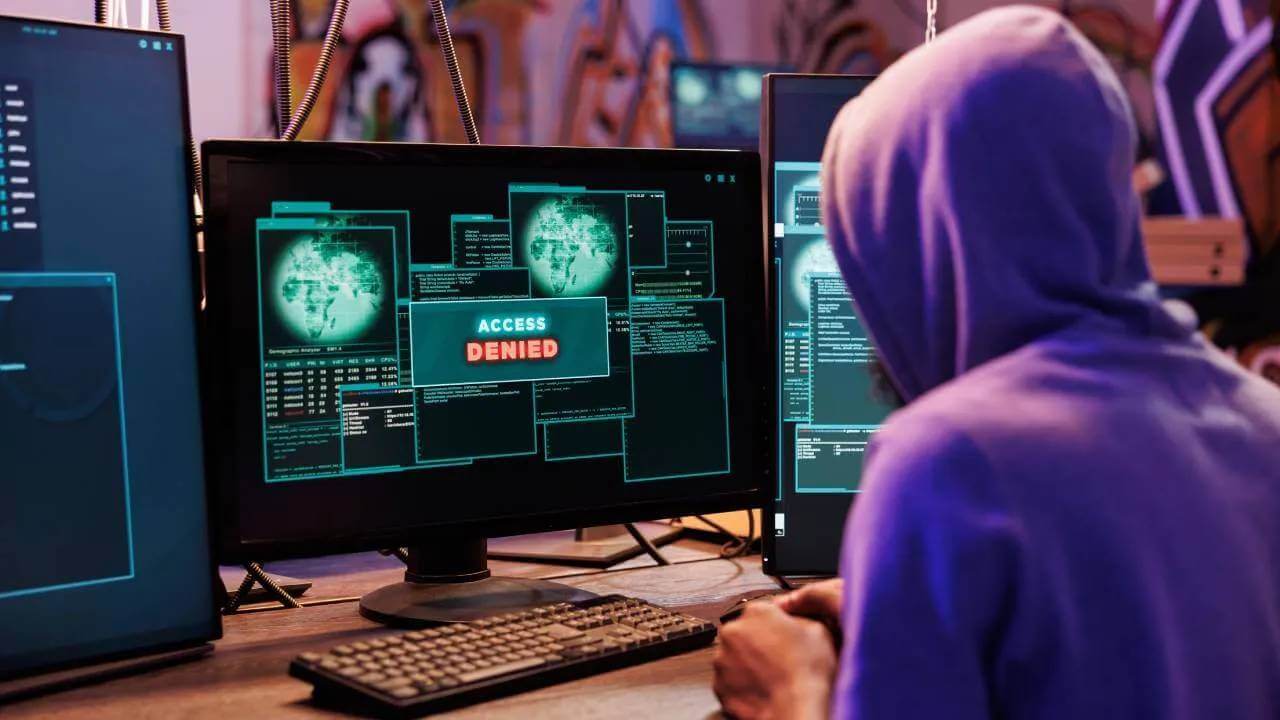
Picture the typical cybercriminal and you probably imagine someone in a darkened room, hammering away at a keyboard trying to punch through a corporate firewall from the outside. That image is increasingly outdated. Across South Africa and much of the African continent, some of the most damaging breaches are not happening because attackers broke in they’re happening because someone on the inside let them through.
Recent reporting by MyBroadband highlights a growing concern among cybersecurity experts: insiders, including employees and contractors, are increasingly connected to successful cyber breaches. Whether due to negligence, coercion, or deliberate collaboration, these internal actors are becoming a critical vulnerability in corporate security.
The threat isn’t entirely new. What has changed is how decisive it’s becoming.
Why an Insider Is Every Hacker’s Best Asset
Unlike external attackers, insiders do not need to break in. They already sit behind the firewall, with legitimate credentials and system access giving outside attackers a way to dig deeper into networks. Insider attacks are particularly hard to detect because the activity often looks normal, blending into everyday operations until the damage is already happening.
A single compromised employee account, or a willing collaborator, can render multiple layers of security investment effectively worthless. Access that would take an external attacker weeks to gain through technical exploitation can be handed over in minutes by someone who already has it.
South Africa Is Ground Zero
South Africa has consistently ranked among the most targeted countries in Africa, with attacks ranging from ransomware campaigns to financial system intrusions. Stricter disclosure requirements are now forcing more companies to report incidents that might previously have gone unnoticed.
Sectors like telecoms and banking remain especially exposed. SIM swap fraud one of the most persistent threats — often relies on internal compromise, whether through weak controls or direct collusion. The result is a pattern that is becoming harder to ignore: external attackers may initiate breaches, but insiders are increasingly what makes them successful.
Part of the vulnerability is structural. South Africa’s digital economy has expanded rapidly, but internal controls, monitoring systems, and workforce training have not always kept pace. Cybersecurity strategies have historically focused on perimeter defence, network security, and external threat detection but insider risk sits outside that traditional model. It exploits trust, access, and human behaviour, which are areas harder to control with technology alone.
A Pattern Playing Out Across Africa
According to INTERPOL, cybercrime now accounts for a significant share of reported crime in several African regions, with some areas seeing rates exceeding 30%. The drivers include rapid digitisation, expanding mobile and financial ecosystems, and gaps in enforcement and cybersecurity capacity.
Nigeria presents a parallel case. Its fast-growing fintech and digital payments ecosystem has created new opportunities but also new vulnerabilities. Global data consistently ranks Nigeria among the countries most affected by cybercrime, alongside South Africa and here too, risk is not purely external. Operational weaknesses, human factors, and internal access points continue to create openings that can be exploited, whether through negligence or intent.
Being Paid to Open the Door
The economics driving insider threats are becoming increasingly deliberate. Cybercriminal groups are now actively recruiting insiders through dark web forums and messaging platforms, offering between $3,000 and $15,000 for internal access to corporate systems.
In some cases, these offers are framed as financial “escape routes” for employees, using emotional and economic pressure to encourage collaboration. The strategy is straightforward: rather than breaking through hardened external defences, attackers are buying their way in using insiders to disable security controls from within.
Several converging factors are amplifying this vulnerability. Economic pressure makes employees more susceptible to coercion or bribery. Critical systems are often accessible to only a small number of staff, making those individuals high-value targets. Many companies still lack adequate tools for behavioural analytics and real-time activity monitoring, leaving dangerous gaps. Meanwhile, attackers are deploying AI to create deepfakes and automate manipulation tactics, making it easier to deceive insiders or conceal malicious activity.
Rethinking the Threat Model
For years, cybersecurity was built around a simple assumption: threats come from outside. That assumption no longer holds. The new reality is that trust itself has become a vulnerability. Employees, vendors, and partners are not just part of daily operations they are now part of the risk equation.
In response, organisations are tightening access controls, closely monitoring user activity, and shifting internal awareness from a minor consideration to a primary line of defence.
The challenge confronting companies across Africa is no longer simply about reinforcing the perimeter. It’s about understanding that for a growing number of attackers, the most valuable target isn’t the firewall — it’s the person sitting just behind it.


Leave a Reply
You must be logged in to post a comment.