



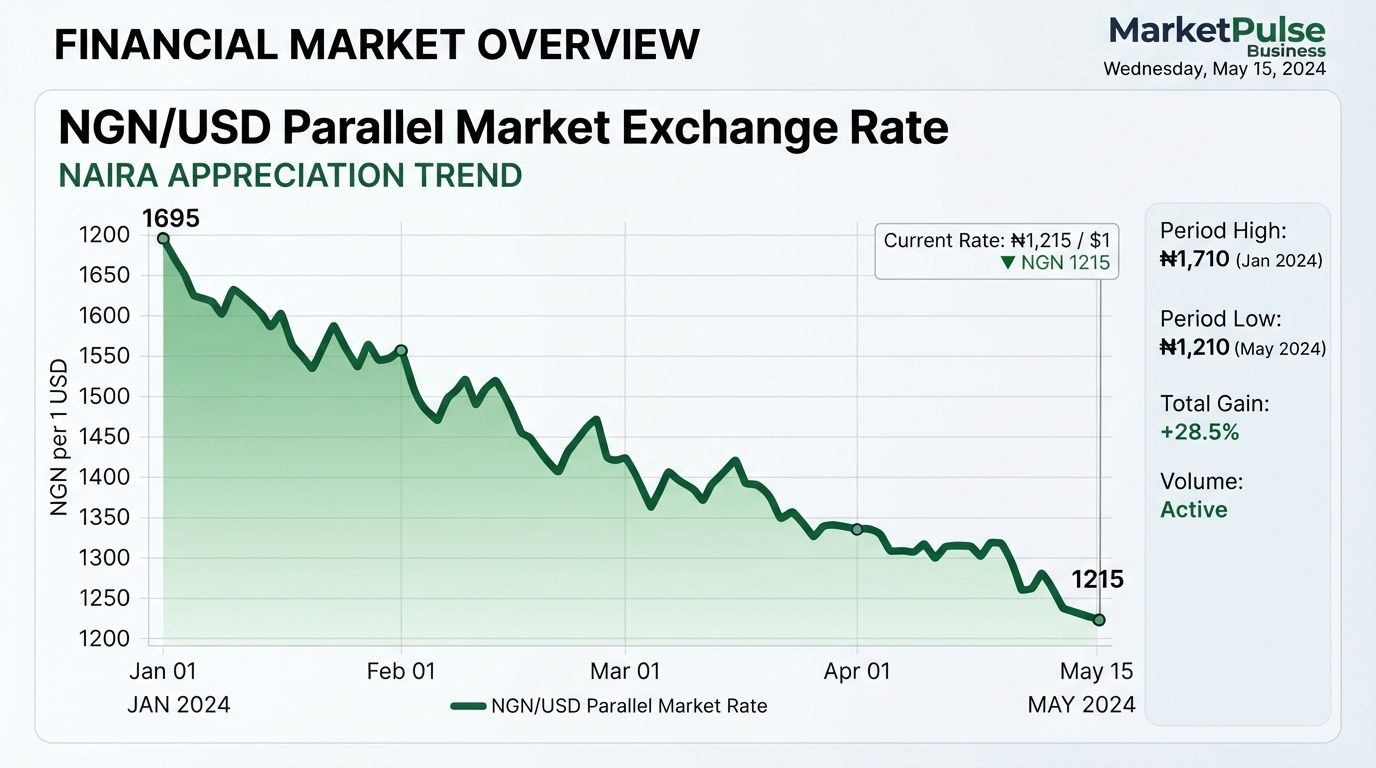
The naira appreciates against the dollar this week, with the currency settling at N1,385 per dollar in the parallel market on Wednesday. That figure represents a notable improvement from N1,390 per dollar recorded just a day earlier, on Tuesday. For everyday Nigerians tracking exchange rate movements, even a modest shift like this one carries real weight for import costs, remittances, and general purchasing power.
Meanwhile, the official channel told a similar story. The naira appreciates in the Nigerian Foreign Exchange Market (NFEM) as well, closing at N1,369 per dollar. Consequently, the gap between the two markets has narrowed somewhat, though a meaningful spread still persists.
Why the Naira Appreciates Across Both Markets
According to data released by the Central Bank of Nigeria (CBN), the indicative exchange rate for NFEM dropped to N1,369 per dollar, down from N1,376 the previous day. That translates to a N7 appreciation within a single trading session—a swing that, while not dramatic, still signals renewed strength for the local currency.
Because both markets moved in the same direction, analysts often view this kind of alignment as a healthier sign than divergence. When the parallel market and the official window drift too far apart, it typically points to underlying pressure or scarcity of dollars through formal channels. This time, however, both figures eased downward together, suggesting at least a temporary calm in demand.
Still, the numbers reveal an important nuance. Even though the naira appreciates in both spaces, the margin between the parallel and official markets actually widened slightly, moving to N16 per dollar from N14 on Tuesday. In other words, although the currency gained ground overall, the black market premium grew rather than shrank. That detail matters because it hints at where genuine dollar demand is concentrated, and it offers a clearer picture than a single headline figure ever could.
Trading Volume Tells a Different Story
Beyond the exchange rate itself, trading activity within the official market shifted dramatically. Interbank turnover at NFEM fell sharply, dropping by 66.5 percent to N90.3 million on Wednesday, down from N269.9 million the day before.
That kind of decline is significant. Lower turnover often means fewer large transactions passed through the official window during the session, even as pricing improved. Consequently, a smaller trading volume alongside a stronger rate can sometimes reflect thinner liquidity rather than robust demand-driven appreciation. Market watchers, therefore, tend to read such figures cautiously rather than celebrating rate movements in isolation.
For context, Nigeria’s foreign exchange system relies on two primary channels: the official NFEM, which the CBN oversees and reports on, and the parallel or “black” market, where transactions happen outside formal banking structures. Because the CBN doesn’t directly control the parallel segment, gaps between the two rates persist, and they fluctuate based on demand pressures, informal supply, and broader sentiment about the economy.
What This Means Going Forward
Currency watchers, importers, and everyday traders alike pay close attention to these daily shifts because they ripple through pricing decisions across the country. A stronger naira, even by a small margin, can ease costs for businesses that rely on imported goods or services. On the other hand, a widening spread between markets—like the one seen this week—can complicate planning for anyone who depends on informal currency channels.
Ultimately, whether this appreciation trend continues will likely depend on a mix of factors: CBN policy actions, dollar inflows from exports or remittances, and overall investor confidence in Nigeria’s economic direction. For now, though, the data point to modest gains across both the parallel and official markets, even as turnover figures suggest the underlying picture remains more complicated than the headline rate alone.
Readers interested in tracking these movements can follow official updates directly from the Central Bank of Nigeria, which regularly publishes exchange rate data and monetary policy updates. For broader context on how currency markets function, Investopedia’s guide to foreign exchange offers a useful primer for readers less familiar with the terminology.
As always, exchange rate figures can shift quickly, and yesterday’s gain doesn’t guarantee tomorrow’s trend. Still, for a currency that has faced considerable pressure in recent years, any day the naira appreciates is worth noting—especially when it happens simultaneously across both major trading channels.



Leave a Reply
You must be logged in to post a comment.