
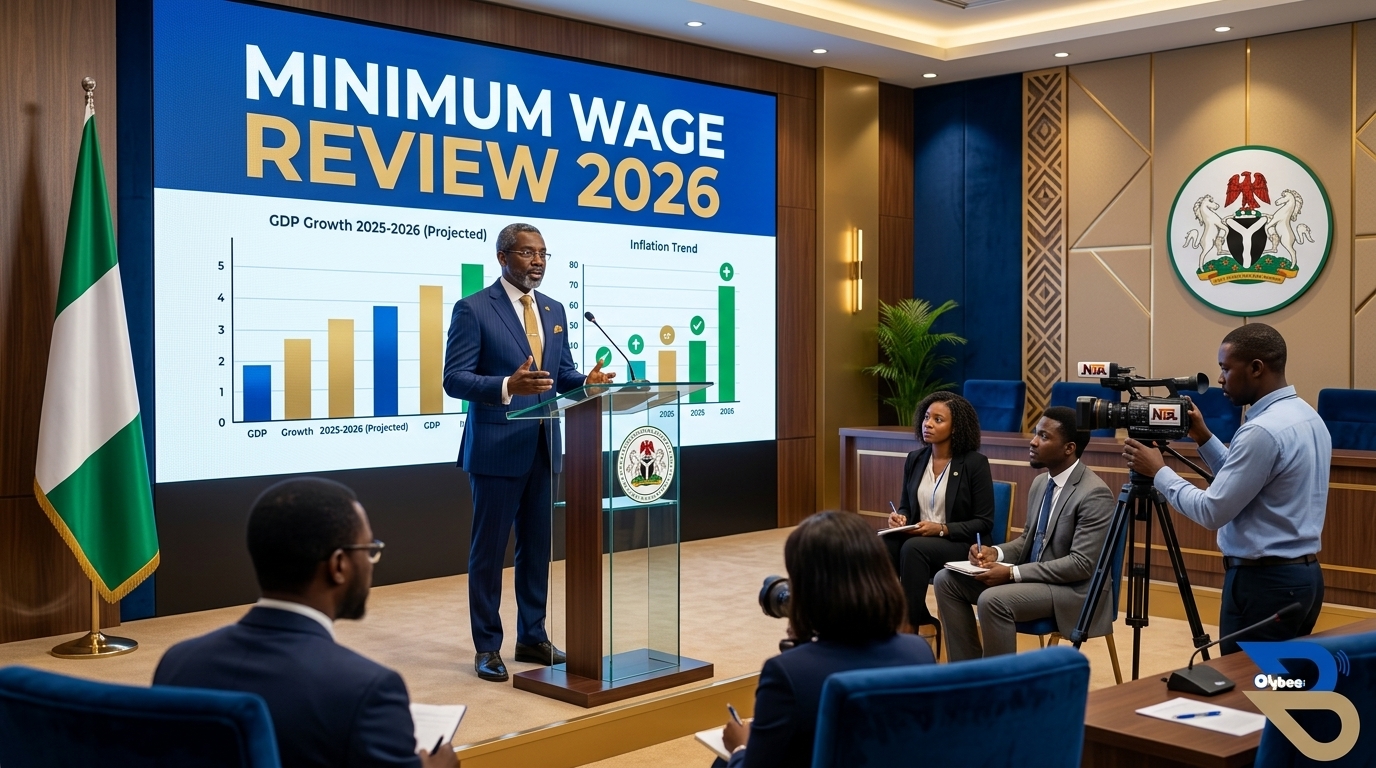


Nigeria’s N70,000 minimum wage review is officially on the horizon, and the Tinubu administration has made its position clear. Chief of Staff to the President, Femi Gbajabiamila, publicly confirmed on Thursday that the current wage floor no longer matches economic realities — and that a formal review process will begin soon. For millions of Nigerian workers already struggling with rising prices, this announcement carries real weight.
Why Nigeria’s N70,000 Minimum Wage Review Can No Longer Wait
Gbajabiamila made the disclosure at the Good Governance Summit 2026, organised by Working People United (WoPU) in Abuja. His message was direct and unusually candid for a government official. Greenlight
“The N70,000 wage, which was a milestone in 2024, must be honestly reassessed against today’s realities,” he said.
He further assured workers and labour unions that the government intends to approach the review as a partner — not an opponent. “When the time comes to begin the process of reviewing the national minimum wage, this administration will approach that endeavour not as an adversary of labour but as a partner,” Gbajabiamila added.
The current N70,000 wage, signed into law in July 2024, more than doubled the previous N30,000 benchmark. At the time, it marked a significant milestone for Nigerian workers. However, inflation has since eroded much of its purchasing power. Food prices, transportation costs, rent, and healthcare expenses have all surged sharply — leaving many workers worse off in real terms than before. Greenlight
Furthermore, the Tinubu administration shortened the wage review cycle from five years to three years, explicitly recognising that “the cost of living does not stand still.” That shortened cycle now positions July 2026 as the expected starting point for fresh wage negotiations. Greenlight
Labour Unions Already Pushing for a Genuine Living Wage Beyond N70,000
Workers are not waiting passively. Labour unions have already signalled their intention to push for a “genuine living wage,” warning that the current framework fails to reflect today’s economic pressures — driven by sharp increases in food, transport, housing, and healthcare costs. Greenlight
Gbajabiamila, notably, did not dismiss those concerns. Instead, he urged organised labour to maintain open lines of communication with the government. He stressed that collaboration, rather than confrontation, would deliver better outcomes for both workers and the broader economy.
Meanwhile, Minister of Labour and Employment Muhammad Dingyadi argued that the true measure of governance is how well policies translate into “improved livelihoods, decent work, increased productivity, social protection, economic opportunities, and dignity for the working people.” Greenlight
That framing matters. Both the Chief of Staff and the Labour Minister are, essentially, setting the tone for what could become Nigeria’s most consequential wage negotiation in years. Employers, unions, and government representatives will soon sit across the table from one another — and the stakes are enormous.
What the N70,000 Minimum Wage Review Means for Nigerian Workers
So what does this review actually mean in practice? Primarily, it means the N70,000 floor — already inadequate by most economic measures — will face a formal upward push. Labour unions will table figures. Employers will push back. Government will mediate. And the outcome will directly affect millions of workers across both the public and private sectors.
Additionally, the review carries political significance. President Tinubu’s administration faces growing public pressure over the cost of living, especially following the removal of the fuel subsidy in 2023. Demonstrating responsiveness on wages offers the government a meaningful opportunity to signal genuine commitment to worker welfare.
For broader context on global wage-setting practices and living wage standards, the International Labour Organization (ILO) — which Nigeria works with closely — provides a comprehensive framework. Additionally, the Nigerian Labour Congress (NLC) remains the primary voice for organised labour heading into the review process.
Nigeria’s minimum wage review arrives at a critical moment. Workers need relief. The economy needs stability. And the government needs trust. With July 2026 fast approaching, all three demands will collide at the negotiating table — and the result will shape the lives of millions of Nigerians for years to come.



Leave a Reply
You must be logged in to post a comment.