




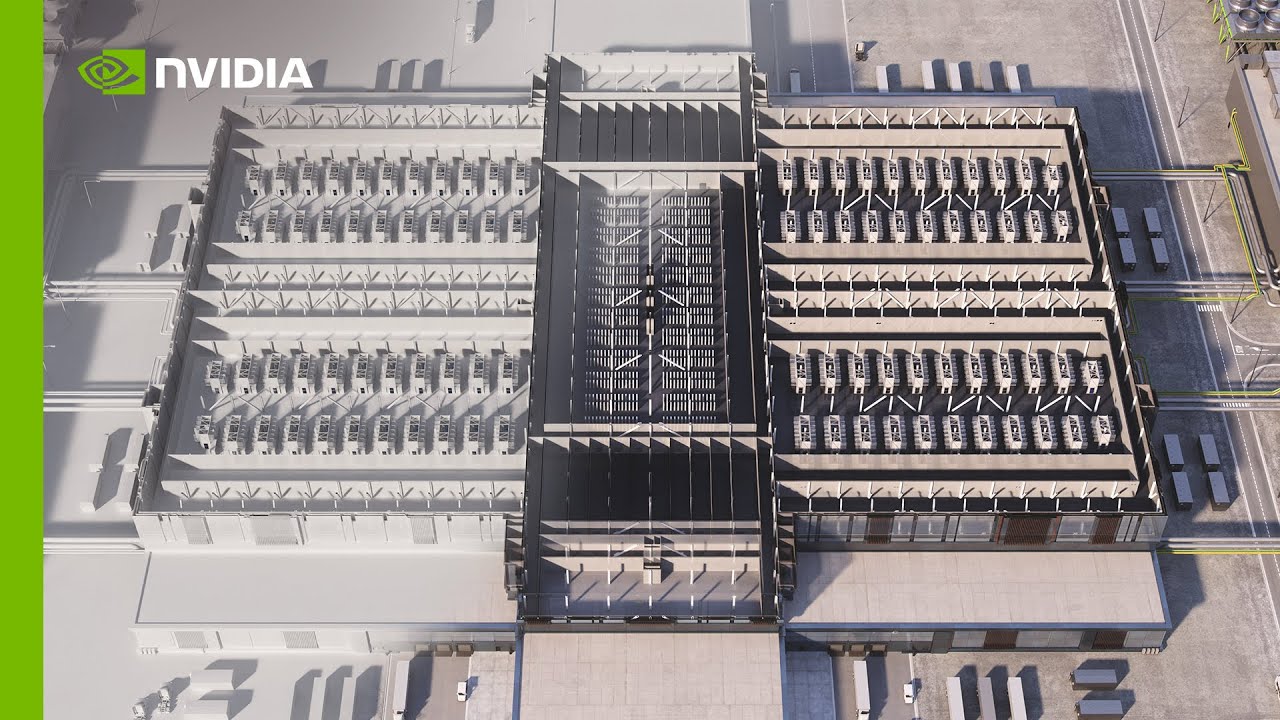
COLUMBUS, Ohio Building a gigawatt-scale AI data center is one of the most complex engineering undertakings a company can attempt and historically, teams have navigated that complexity using documents, spreadsheets, and siloed handoffs between power, cooling, and controls teams that simply don’t talk to each other fast enough. Vertiv wants to change that, and this week it took a significant step toward doing so.
Vertiv (NYSE: VRT), a global leader in critical digital infrastructure, announced progress on a production-grade digital twin capability for Vertiv SmartRun integrated in the NVIDIA Omniverse DSX Blueprint, advancing the company’s roadmap to make AI factory infrastructure more configurable, repeatable, and simulation-ready.
In plain terms: Vertiv’s SmartRun overhead converged infrastructure system the physical cabling, power distribution, and cooling management backbone that runs above server racks can now be virtually assembled, configured, and stress-tested inside NVIDIA’s simulation environment long before anyone picks up a wrench.
Why the Old Way Isn’t Fast Enough Anymore
The AI infrastructure buildout is accelerating at a pace that traditional planning methods genuinely struggle to match. As AI deployments scale to higher densities and larger capacities, data centers need a faster, more reliable way to turn each generation of computing into real-world infrastructure. Traditional, document-based processes and siloed handoffs across power, cooling, controls, and deployment teams can’t keep pace. Vertiv SmartRun’s digital twin shifts planning to a model-based approach, allowing infrastructure to be designed, simulated, and validated as a single system before build-out.
That last phrase carries meaningful weight. Catching an incompatibility between a cooling configuration and a power distribution layout during a simulation costs nothing. Catching it after a data hall is half-built is a very different conversation.
What NVIDIA Brings to the Table
NVIDIA’s DSX Blueprint is the simulation environment at the center of this collaboration, and NVIDIA has been deliberate about the infrastructure partners it’s brought into the fold. Vladimir Troy, Vice President of AI Infrastructure at NVIDIA, described the platform’s purpose: “NVIDIA Omniverse DSX Blueprint helps the ecosystem build, simulate, and optimize gigawatt-scale AI factory digital twins using OpenUSD, SimReady assets, and power, thermal, and operational simulations. Bringing Vertiv SmartRun into this workflow can help customers evaluate infrastructure choices earlier and prepare for multiple generations of accelerated computing.”
Vertiv is not operating in isolation here. NVIDIA has assembled a coalition of infrastructure heavyweights including Siemens, Schneider Electric, and Eaton all contributing components to the DSX architecture. The goal is to enable full-scale virtual validation of AI factory designs before any physical construction begins. NVIDIA highlighted Vertiv’s contributions during its GTC announcement on March 16, 2026, placing the company among a broad array of partners building out the DSX vision.
The SmartRun Digital Twin in Practice
Vertiv’s offering includes SimReady 3D assets covering generators, electrical equipment, and cooling systems. Each component is designed to behave realistically within NVIDIA’s Omniverse simulation environment, meaning engineers can test how power flows from the grid to individual chips and how liquid cooling handles heat loads at scale.
The demonstrator was created using Dassault Systèmes model-based systems engineering capabilities on the 3DEXPERIENCE platform and connected to NVIDIA Omniverse DSX workflows, establishing a shared digital foundation for configuration, simulation, validation, and future optimization across the AI factory infrastructure lifecycle.
This builds on groundwork Vertiv laid in October 2025, when the company released gigawatt-scale reference architectures incorporating the prefabricated Vertiv OneCore platform alongside 3D assets meant for digital twin simulations. The new SmartRun integration takes that foundation and weaves it directly into NVIDIA’s DSX ecosystem making it actionable within a workflow engineers are already using.
Earlier Vertiv reference architectures claimed a reduction in Time to First Token of up to 50% in practical terms, cutting in half the time between committing to build an AI data center and actually generating useful compute output from it.
Live at Computex Taipei
At Computex Taipei 2026, Vertiv is demonstrating Vertiv SmartRun as both a physical infrastructure system and a configurable digital twin, allowing attendees to explore configuration scenarios and see how model-based design choices can support downstream infrastructure planning, coordination, and simulation workflows. The side-by-side demonstration real hardware next to its virtual counterpart offers an unusually direct illustration of what this technology is trying to accomplish.
The Vertiv SmartRun digital twin is described as the first phase in Vertiv’s multi-phase AI factory digital twin roadmap, with the company extending the approach to Vertiv OneCore Rubin DSX to help customers translate future compute requirements into deployable physical infrastructure before those requirements reach full deployment scale.
The broader direction is clear: as AI factories grow in complexity and capital expenditure, the ability to simulate, validate, and iterate in software before committing to physical construction is becoming less of a nice-to-have and more of an operational necessity. Vertiv is positioning itself as the company that bridges the gap between the compute ambitions of AI at scale and the unglamorous but essential physical infrastructure required to actually run it.







Leave a Reply
You must be logged in to post a comment.