



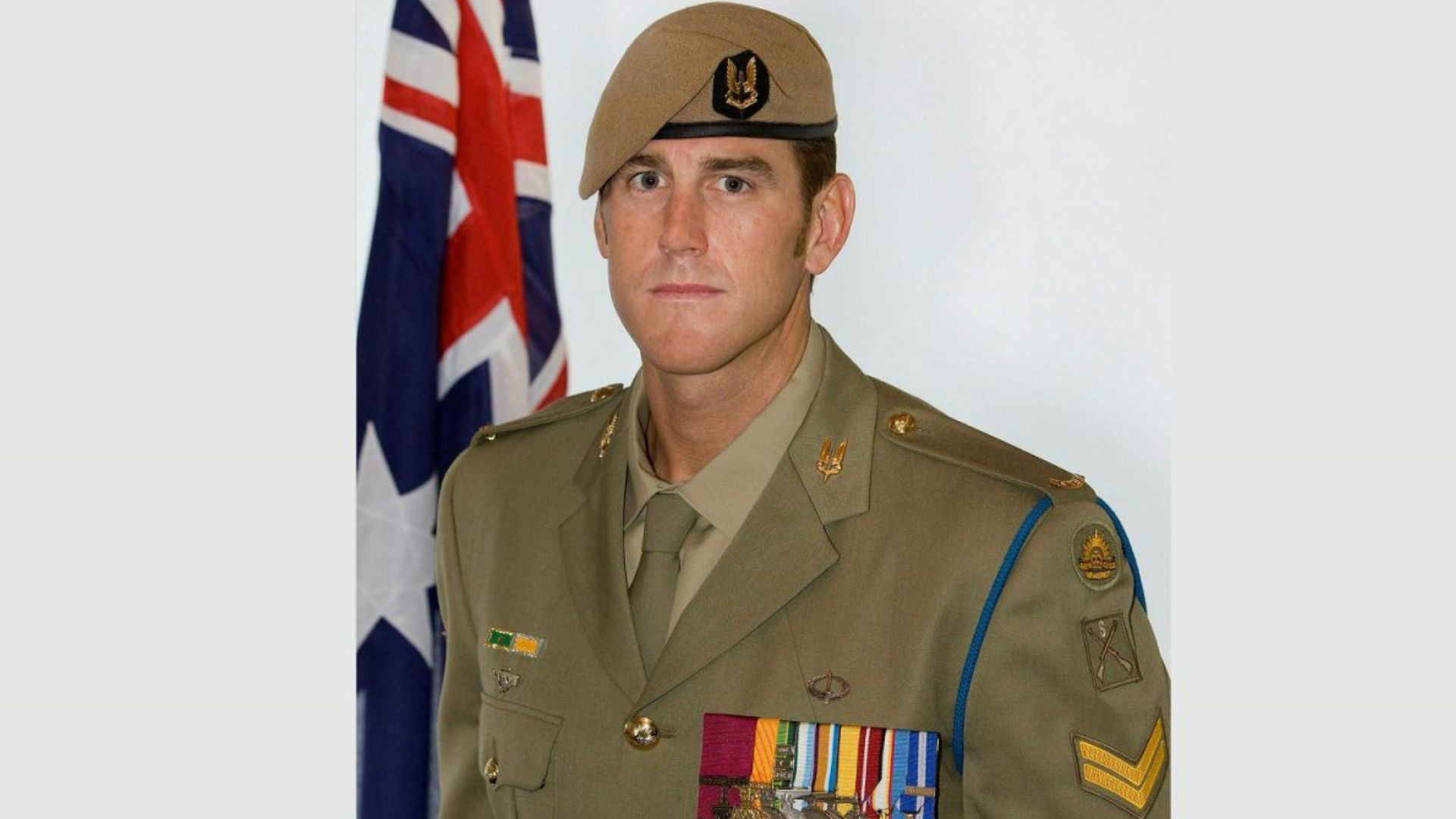
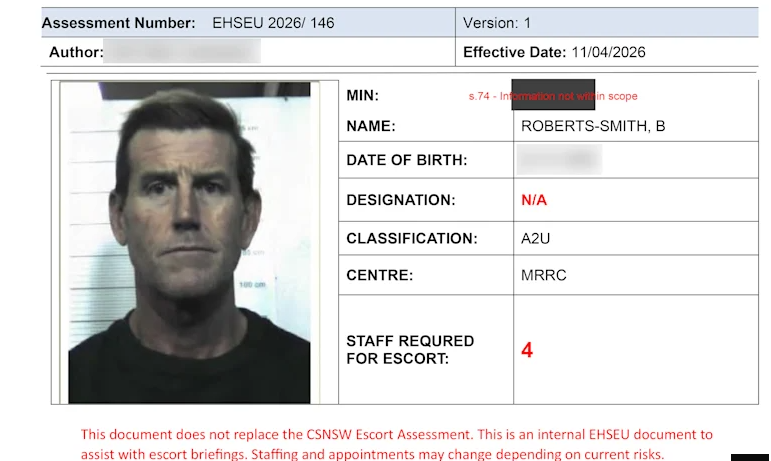
NSW prison officers planned a secret Ben Roberts-Smith prison exit through a rear gate – and also gave his partner priority access and ensured he received daily exercise – in a series of special interventions now drawing intense scrutiny. A cache of internal documents obtained by The Age has blown the lid off the preferential handling of Australia’s highest-profile accused war criminal inside Silverwater Correctional Complex.
The documents also contain the first-ever photographs of Roberts-Smith behind bars. Furthermore, they reveal how the failed exit attempt could have ended in what one security manager described as “a very dangerous situation.”
The Secret Ben Roberts-Smith Prison Exit Plan That Went Wrong
NSW Corrective Services classified Roberts-Smith as the highest-profile inmate the facility had ever handled. Specifically, they designated him a “national security interest inmate” – a label that triggered extreme “high-risk security escort protocols.” The goal was to get the 47-year-old out of jail safely after bail on April 17. Instead, what followed was chaos.
Silverwater jail governor Patrick Aboud personally led a convoy of vehicles to escort Roberts-Smith and his partner, Sarah Matulin, out of the complex. Aboud’s own vehicle blocked the road during the exit. Several additional vehicles formed around the convoy. Together, they tried to prevent media photographers from capturing the former soldier’s release.
Initially, however, prison officers planned something else entirely. Documents show they intended to take Roberts-Smith and Matulin directly to the rear gate of the facility – essentially slipping him out through the back. Aboud overruled that plan and directed the group along a public road instead.
Two female Security Operations Group officers then stepped outside their vehicles. They physically moved to block media access and prevent any interaction with Roberts-Smith. Their supervisor later wrote that the officers feared the media would box in the car. He also noted concern about “an unidentified person jumping from the rear vehicle and running towards the vehicle containing Roberts Smith” – describing it as “a very dangerous situation.”
Internal Scramble After the Release Went Public
Four days after the bail release, Aboud sent advice to deputy commissioner Adam Wilkinson. He said senior staff had completed a “dynamic operational risk assessment” on the day. Aboud also confirmed he personally directed officers to escort Matulin through the facility because she was unfamiliar with its layout – a decision he described as necessary to “mitigate risks.”
Aboud defended every decision firmly. “Any assertion that the release arrangements constituted special or preferential treatment is not supported by me or the operational facts,” he wrote. “I stand by my decision and will do this all over again without fear or favour.” He added that the use of the rear exit “constituted a deliberate, risk-informed, and professionally justified response to an exceptionally complex operational environment.”
Nevertheless, the review found serious procedural failures. None of the officers involved activated their body-worn cameras. Moreover, none submitted incident reports. The review criticised this directly, noting the event clearly “constituted a significant external security event.”
Ken Pese, general manager of the Security Operations Group, subsequently reminded officers of a significant limitation. “Just a reminder that we are limited with our powers to deal with these types of situation on public roads. No further action required,” he wrote on April 20. He separately noted: “In future, we’ll need to advise our teams that we don’t have any powers on public roads so such actions are not necessary.”
Pese also called officers to attend a workshop with the Corrective Services NSW media unit. The purpose was to build a proper protocol for releasing high-profile inmates. An April 23 email from Pese acknowledged “a gap in our procedures” from an operational planning perspective.
Inside Silverwater: How Officers Managed Roberts-Smith Day to Day
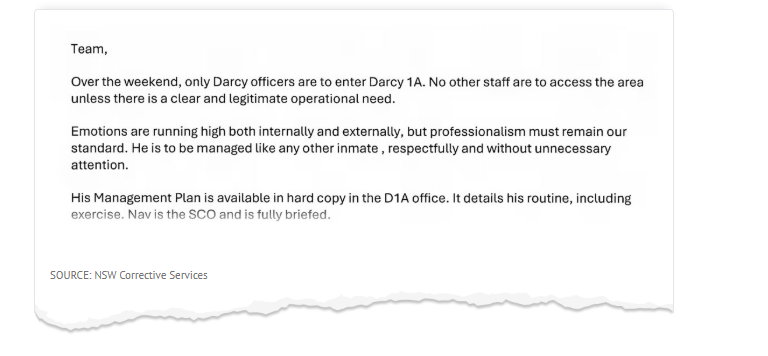
Beyond the chaotic release, the documents offer a rare window into Roberts-Smith’s day-to-day treatment inside Silverwater. Three days after his arrest at Sydney Airport in April, the prison’s security manager emailed colleagues directly. “Emotions are running high both internally and externally, but professionalism must remain our standard,” he said. “He is to be managed like any other inmate, respectfully and without unnecessary attention.”
Yet that same security manager then personally stepped in to ensure Roberts-Smith received daily exercise. “Hi, as discussed this morning over the weekend can you ensure BRS is offered his exercise each day?” he wrote.
A corrective services briefing also noted broader public sentiment around the case. “Countless numbers of public sympathisers for Roberts-Smith have voiced their outrage of his arrest on various social media platforms,” it stated.
This entire episode marks the second time law enforcement has faced controversy over handling of Roberts-Smith’s case. The first came when the father of two was publicly arrested at Sydney Airport in April and charged with five counts of war crime murder over the alleged killing of unarmed Afghan detainees.
The department initially withheld information. It only ordered an internal “After Action Review” three days after media questions from the ABC, The Daily Telegraph, and The Age. The outcome of that review remained unpublished until documents were released this week.
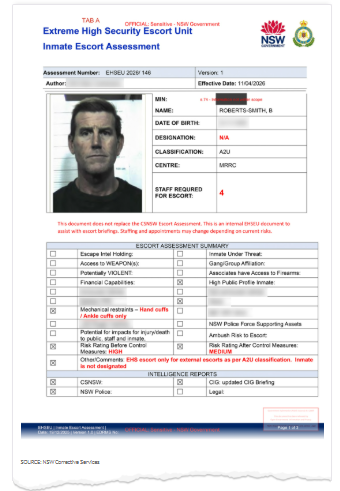
Corrective Services NSW maintained in a statement that Roberts-Smith received no preferential treatment. “While we acknowledge that, in this instance, the protocols applied by CSNSW staff were not well suited to engagement with the media, CSNSW has reviewed the actions of all correctional staff involved and have not found any evidence of misconduct,” a spokesperson said. “Corrective Services staff are trained to prioritise community safety and to keep themselves and inmates safe while performing their duties.”
The Ben Roberts-Smith prison exit saga, however, raises obvious questions — not just about procedures, but about whether Australia’s most decorated accused war criminal was ever truly treated like any other inmate.






Leave a Reply
You must be logged in to post a comment.