

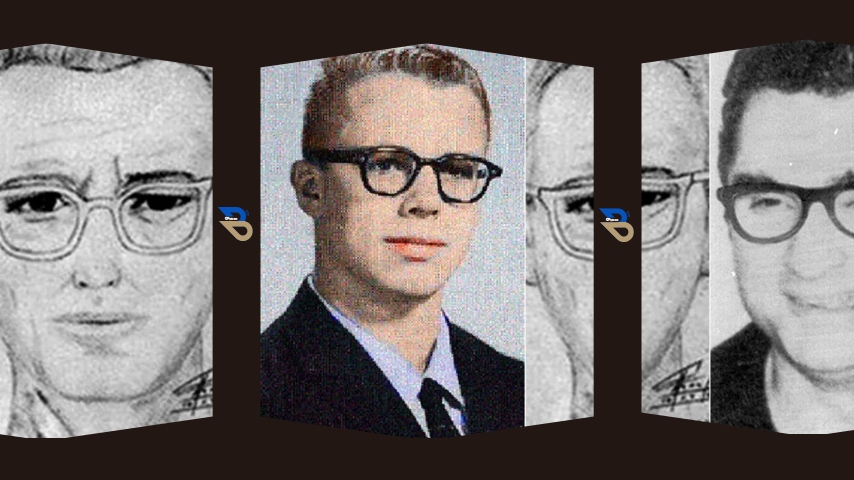


More than five decades after a self-described killer began terrorizing Northern California, the Zodiac Killer case remains one of the most studied and least resolved mysteries in American criminal history. Despite thousands of suspects, mountains of physical evidence, and a string of taunting letters sent directly to newspapers, the person behind at least five confirmed murders has never been identified or caught.
How the Zodiac Killer’s Reign of Terror Began
The first confirmed attack happened on the night of December 20, 1968. Seventeen-year-old David Faraday picked up his girlfriend, sixteen-year-old Betty Lou Jensen, for what was meant to be their first official date together, though the two had reportedly already been spending time with each other for weeks. They drove to a quiet turnout along Lake Herman Road outside Benicia, a spot locally known as a place couples went to park.
Sometime before 11:00 p.m., a stranger pulled up alongside their car, got out, and opened fire first on the vehicle itself, then on the teenagers as they tried to flee. Jensen was shot multiple times in the back as she ran; Faraday was killed by a single shot to the head. Passersby found their bodies; Faraday was still alive when authorities arrived but died en route to the hospital. Investigators recovered tire tracks and shell casings from a 9mm handgun at the scene, but no suspect emerged.
The killer struck again roughly six months later. In the early hours of July 5, 1969, Darlene Ferrin, 22, and Mike Mageau, 19, were sitting in a parked car at Blue Rock Springs Park in Vallejo when a man approached and shot them both. Ferrin died from her wounds; Mageau survived despite being hit multiple times. Shortly afterward, someone called Vallejo police to report “a double murder” in a calm, controlled voice a call later attributed to the killer himself.
The case escalated further on September 27, 1969, at Lake Berryessa in Napa County, where the man — described by survivors as a heavyset figure wearing a black hood marked with a white crosshair symbol — approached a young couple, Bryan Hartnell and Cecelia Shepard, at knifepoint. He stabbed both repeatedly; Hartnell survived eight wounds to the back, but Shepard died from her injuries two days later. The killer left a message scrawled on Hartnell’s car door referencing the dates of his previous attacks.
His final confirmed killing came on October 11, 1969, when cab driver Paul Stine, 29, was shot in the head in San Francisco’s Presidio Heights neighborhood. Witnesses saw the gunman flee on foot, and police later recovered fingerprints from the cab, though they were never matched to a known suspect.
The Letters, the Codes, and a Killer Who Wanted an Audience
What set this case apart from other unsolved murders was the killer’s decision to taunt the public directly. Beginning in the summer of 1969, he began mailing letters to the San Francisco Chronicle, San Francisco Examiner, and other Bay Area papers, often including pieces of cryptic, hand-drawn ciphers he claimed would reveal his identity if solved. He signed his letters with a circle-and-crosshair symbol and adopted the name “Zodiac.”
One of those ciphers, a 408-character cryptogram, was famously cracked within days not by the FBI, the CIA, or the National Security Agency all of whom had attempted it but by a husband and wife in Salinas, California. Donald Harden, a history and economics teacher, and his wife Bettye worked through the code by guessing at likely opening phrases and tracking repeated letter patterns, eventually landing on a decoded message in which the writer described killing people for sport. Naval Intelligence later verified their solution as completely accurate.
A second, far more complex 340-character cipher went unsolved for decades, finally cracked in December 2020 by a small international team of code-breaking enthusiasts using software-assisted analysis, more than fifty years after it was sent.
Through his letters, the Zodiac eventually claimed responsibility for as many as 37 murders, though investigators have only ever been able to confirm five deaths and two surviving victims tied directly to him.
A Case That Has Outlived Generations of Investigators
The sheer volume of attention the case has generated is part of what’s kept it alive in public memory. More than 2,500 individuals have been investigated as potential suspects over the years, and the unsolved nature of the killings has been blamed for ruined careers, broken marriages, and lasting personal strain among some of the investigators and amateur researchers who devoted years to it.
Periodically, new claims of a breakthrough surface. In 2021, a group of retired law enforcement officers and amateur investigators calling themselves “The Case Breakers” announced they had identified the Zodiac as a man named Gary Francis Poste, a former U.S. Air Force member. The San Francisco Police Department and other agencies involved in the original investigation publicly stated the claim did not meet the evidentiary bar needed to close the case, and it remains unverified and disputed.
Law enforcement agencies have periodically revisited old evidence using modern DNA technology, hoping advances that helped identify suspects in other cold cases most notably California’s Golden State Killer in 2018 might eventually do the same here. As of the most recent reviews, no DNA match has been announced.
Inside the Golden State Killer Case: How DNA Cracked a 40-Year Mystery →
America’s Most Notorious Unsolved Crimes, Explained →
The case’s enduring grip on popular culture was cemented further by David Fincher’s 2007 film “Zodiac,” based largely on reporting and books by former San Francisco Chronicle cartoonist Robert Graysmith, who spent years independently investigating the killings. For investigators who worked the case across multiple decades, the lack of resolution still stings. As retired San Francisco homicide inspector Frank Falzon put it in past interviews, he remains convinced the answer is sitting somewhere in old case files, waiting to be found.
For background on the case from one of the law enforcement agencies that investigated the killings, additional historical detail is available through the San Francisco Police Department’s official records.







Leave a Reply
You must be logged in to post a comment.