


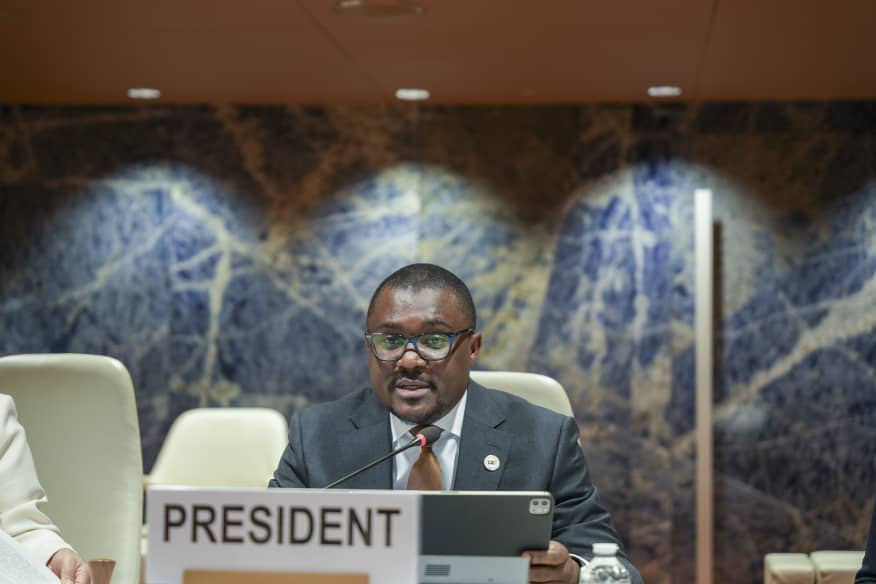
Nigeria’s Professor Babatunde Rabiu has been elected 2nd Vice-Chairman and Rapporteur of the UN-COPUOS – the United Nations committee that governs humanity’s activities in outer space. The appointment puts Nigeria firmly at the table of global space policymaking, and it is generating well deserved excitement back home.
The announcement came via Mr Olayode Abdurasaq, Senior Special Assistant on Media Communications to the Director General of the National Space Research and Development Agency (NASRDA), Dr Matthew Adepoju. He shared the news with reporters in Abuja on Monday.
What Is UN-COPUOS and Why Does This Matter?
The UN Committee on the Peaceful Uses of Outer Space (UN-COPUOS) is the premier multilateral platform where nations discuss space activities, share national plans, and shape international space policy. It feeds directly into the work of the UN Office for Outer Space Affairs (UNOOSA). Sitting on its leadership is not a ceremonial role it carries real influence over how global space cooperation is structured.
Rabiu, a widely respected Space Physicist and Research Director at NASRDA, took up the position at the 69th Session of the UN-COPUOS meeting, currently running in Vienna, Austria from June 10 to June 19, 2026.
Speaking on what the role means for Nigeria, Rabiu was direct. The appointment, he said, puts Nigeria in a stronger position to extract meaningful benefits from international space cooperation. It also boosts NASRDA’s standing as Africa’s leading national space agency something he says is now globally recognised.
“Nigeria is strategically positioned to harness the benefits of international cooperation being championed by UN-COPUOS,” he said. “With this appointment, we stand to benefit from several activities within the scope of UNOOSA, for which UN-COPUOS provides policy input.”
A Pattern of Nigerian Leadership in Global Space Governance
This is not Nigeria’s first rodeo at the UN-COPUOS leadership level and NASRDA’s Director General was quick to point that out.
Dr Adepoju, while congratulating Rabiu, described the appointment as another proud milestone. He recalled that the late Dr Adigun Abiodun served as Chairman of the full UN-COPUOS between 2004 and 2006. More recently, Dr Francis Chizea also a Research Director at NASRDA held a vice-chairmanship from 2019 to 2021.
“Nigeria does not merely participate in global space governance but continues to provide leadership at the highest levels,” Adepoju said. He also praised Rabiu’s decades of service to the development of space science and technology in Nigeria and his contributions to the wider global space community.
The D-G’s message was clear: this is a pattern, not a coincidence. Nigeria keeps showing up and keeps getting recognised.
Rabiu’s Message to Nigerian Scientists: Keep Going
Beyond the diplomatic and institutional significance, Rabiu used the occasion to send a message to the next generation of Nigerian scientists watching from home.
“Our impacts are being felt at global levels,” he said, “and this appointment offers hope to national scientists.” His advice was simple but pointed: stay diligent, stay focused, and trust that the work will be seen. Global recognition, he suggested, is available to Nigerians who pursue it with commitment.
It is the kind of statement that lands differently when it comes from someone sitting in a leadership chair at a United Nations session in Vienna.
Nigeria Punching at Its Weight on the World Stage
Prof. Rabiu’s election to the UN-COPUOS vice-chairmanship is another data point in a growing argument: that Nigeria’s scientific and technical talent is increasingly visible at the highest levels of global institutions. For a country still working through many domestic challenges, moments like this serve as reminders of what its people are capable of when given the platform.
The 69th Session of UN-COPUOS continues in Vienna through June 19, 2026. Nigeria, for now, has a seat and a voice right at the centre of it.




Leave a Reply
You must be logged in to post a comment.