




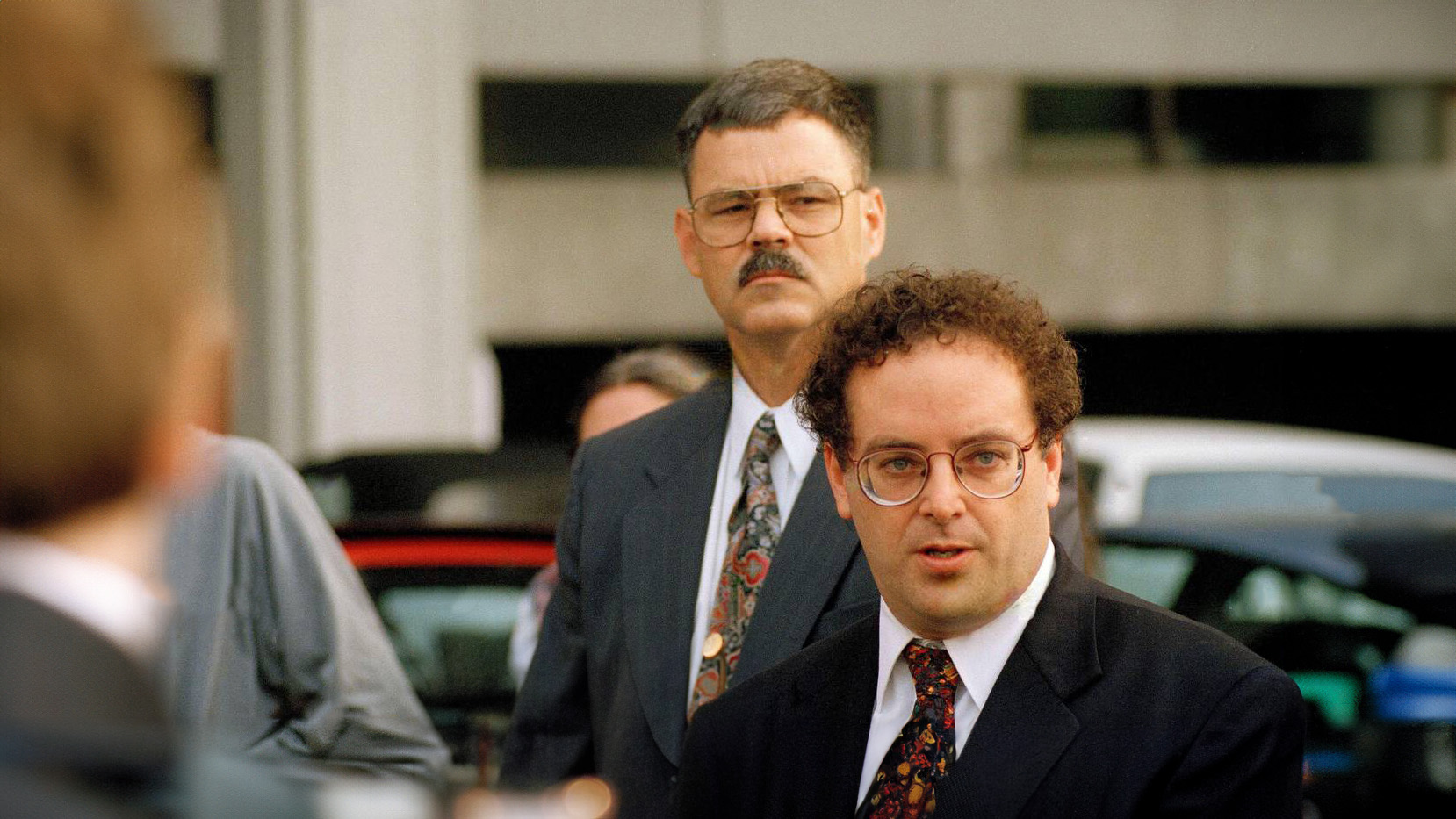
A retired FBI forensic chemist’s decades-old fight against his own employer is drawing fresh attention online, as new retrospectives revisit how Dr. Frederic Whitehurst became the bureau’s first successful whistleblower by documenting forensic fraud inside the FBI Laboratory including in two of the most consequential bombing cases in modern American history.
Whitehurst, a chemist with a doctorate and the FBI’s top explosives examiner through the late 1980s and 1990s, didn’t set out to take on the bureau. He simply did what the rulebook told him to do. In 1989, after hearing a colleague give courtroom testimony that the underlying data couldn’t support, he reported it through the proper internal channels, exactly as FBI policy required. What came back wasn’t a correction. It was a reprimand aimed at him, not at the agent whose testimony had gone unchallenged.
A Pattern That Kept Repeating Itself
That early experience set the tone for nearly everything that followed. Rather than back down, Whitehurst began keeping meticulous personal records: altered lab reports, skipped procedures, conversations with colleagues who shared his concerns. Over time, those notes became the backbone of one of the most significant forensic scandals in FBI history.
The most serious allegations centered on the 1993 World Trade Center bombing investigation. According to Whitehurst’s later sworn testimony, federal investigators believed they’d found a urea nitrate explosive device, but Whitehurst concluded the science didn’t back up that claim. When he wouldn’t alter his findings to support the government’s theory, prosecutors instead relied on a lab technician without the qualifications to offer expert forensic opinions. Whitehurst later testified that the FBI used misleading scientific reports and pressured scientists to give false testimony to support the World Trade Center bombing prosecution. To prove the point, he ran a quiet experiment: he submitted two blind samples to that same technician for testing one made from a commercial fertilizer, the other from his own urine. Both samples came back testing positive for urea nitrate, the explosive component associated with the case.
The Oklahoma City bombing investigation drew similar scrutiny. After the April 19, 1995 bombing of the Alfred P. Murrah Federal Building killed 168 people, Whitehurst sent the Justice Department’s Office of Inspector General a detailed letter criticizing a fellow examiner’s explosives report in the case, arguing it exceeded the examiner’s expertise, leaned toward the prosecution, and drew conclusions that weren’t justified by the evidence. Investigators looking into the claim later largely agreed. The Inspector General’s office concluded the examiner had repeatedly reached conclusions incriminating the defendants without adequate scientific grounding, and that the supervisor responsible for reviewing the report had allowed too much latitude and approved findings he could not fully support.
The Cost of Reporting FBI Lab Misconduct
The allegations didn’t stop at two cases. The Justice Department’s Office of Inspector General ultimately investigated wrongdoing tied to some of the era’s most significant prosecutions, including the World Trade Center bombing, the Oklahoma City bombing, and the mail-bomb assassination of U.S. Circuit Judge Robert Vance, known internally as the VANPAC case. Whitehurst accused laboratory examiners of testifying outside their actual expertise, reaching conclusions the evidence didn’t support, committing perjury, fabricating evidence, and skipping required procedures and said FBI management retaliated against him for raising the alarm.
That retaliation, by Whitehurst’s account and that of supporters, was severe. He has said he was moved into a closet-sized workspace, placed under surveillance he worried could be manipulated, and eventually put on administrative leave. His wife, who also worked at the bureau, says she faced harassment on the job and was effectively forced to resign in 1998.
The Inspector General’s investigation grew large enough that officials brought in an international panel of five outside scientific experts to assist with the review, after other Laboratory scientists independently confirmed parts of Whitehurst’s claims by mid-1995. Whitehurst’s complaints, laid out across more than 125 memos and sworn statements to the Inspector General, raised the possibility that more than 1,000 federal convictions could eventually face appeal.
Vindication, a Settlement, and Lasting Reform
The final reckoning came in April 1997, when the Justice Department released its findings. Attorney General Janet Reno acknowledged the report’s weight at the time, noting the FBI lab handles roughly 600,000 examinations annually and plays a central role in the justice system. The bureau went on to adopt 40 recommended reforms aimed at improving laboratory procedures, and the Department of Justice’s Inspector General gained ongoing oversight of the lab going forward.
In 1998, Whitehurst and the FBI reached a settlement worth roughly $1.16 million, closing out his employment dispute and formally clearing his name. He didn’t stop there. He went on to lead the National Whistleblower Center’s Forensic Justice Project, where he later helped uncover that the Justice Department had failed to follow through on its pledge to review older cases potentially tainted by flawed hair and fiber analysis a failure that triggered a fresh review effort years later involving the Innocence Project and the National Association of Criminal Defense Lawyers.
Today, Whitehurst is widely credited as the first FBI employee to successfully blow the whistle on internal misconduct and survive the fallout, a case that helped pave the way for federal whistleblower protections that didn’t previously exist for bureau employees.
How Forensic Science Errors Have Overturned Real Convictions →
Inside the Oklahoma City Bombing Investigation, 30 Years Later →
For the full Inspector General findings on the FBI Laboratory matter, the original report remains publicly archived on the Justice Department’s Office of the Inspector General website.
Source: BLACKFILES, for further background and a fuller narrative account of this story.








Leave a Reply
You must be logged in to post a comment.