
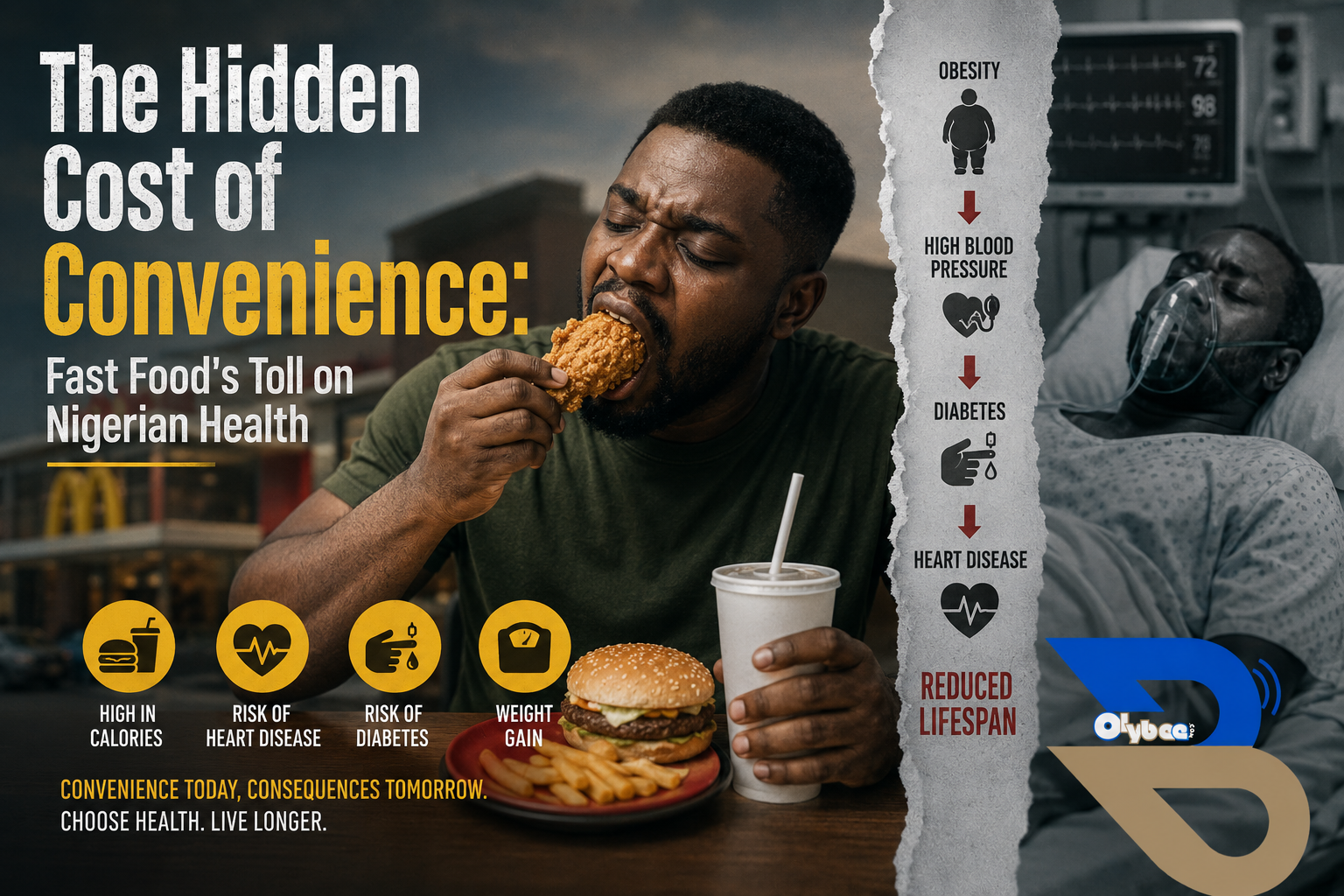



The hidden cost of convenience is showing up on dinner tables across Nigeria, and it’s not measured in naira alone. As fried chicken joints, shawarma stands, and international fast-food chains multiply in cities like Lagos, Abuja, and Port Harcourt, doctors warn that the price of quick meals is climbing far beyond the receipt.
What looks like progress, more choices, faster service, global brands on every corner, carries a quieter bill. That bill is paid in blood pressure readings, blood sugar levels, and hospital visits that didn’t used to happen this often.
How Fast Food Became Nigeria’s Daily Habit
Major international chains, including Burger King, McDonald’s, KFC, Pizza Hut and Subway, have expanded across Africa in recent years, drawn by a growing middle class with money to spend and a taste for processed food. That expansion has coincided with an obesity epidemic unfolding in countries including Egypt, Ghana, South Africa and Nigeria.
Local fast-food culture has grown alongside the international brands. Many Nigerians, particularly in cities, turn to fast food simply because it’s convenient and affordable compared to preparing traditional meals at home. Ironically, those traditional meals often pack more fiber, vegetables, and lean protein than the fried, processed alternatives now lining city streets.
The Hidden Cost of Convenience on Nigerian Health
The numbers tell their own story. Roughly 20 to 35 percent of Nigerian adults are now classified as overweight, with obesity rates ranging from 8 to 22 percent depending on gender and income level. Women in urban areas face higher obesity rates than men, according to research cited on Wikipedia’s overview of obesity in Nigeria.

Medical researchers have linked regular fast-food consumption to type 2 diabetes, cardiovascular disease, and rising body mass index among both adults and younger Nigerians.
Children and teenagers face heightened health risks tied to frequent fast-food intake, with urbanization and shifting lifestyles fueling the trend nationwide.
Health commentators describe Nigeria’s urban lifestyle bluntly: fast food, fast work, and fast stress are producing slow but certain consequences, including hypertension, type 2 diabetes, heart disease, and obesity-linked cancers. The World Health Organisation’s Africa office has flagged a troubling pattern across the continent, a “double burden of malnutrition” where undernutrition persists in rural areas while overweight and obesity climb in wealthier cities.
A Crisis Sharpened by Economic Pressure
Nigeria’s cost-of-living squeeze has added an unexpected twist. Rising inflation and food prices are pushing many Nigerian households toward cheaper, heavily processed foods loaded with salt, sugar, and preservatives, deepening risks of diabetes, hypertension, and chronic illness. For families stretching every naira, processed meals sometimes feel like the only affordable option, even though they carry long-term health costs that outweigh short-term savings.
Yet fast food isn’t always cheap by local standards either. Eating out twice a week can run a household roughly 100,000 naira a month, several times Nigeria’s minimum wage. Add medical bills for diabetes, hypertension, or heart disease later, and the convenience starts looking expensive in more ways than one.
Public health voices argue the fix doesn’t require abandoning modern life entirely. Cooking at home more often, drinking water instead of soft drinks, and returning to staples like yam, beans, plantain, and groundnut soup could ease the pressure on Nigeria’s already strained healthcare system. None of that erases convenience from daily life. It just asks Nigerians to weigh what convenience is actually costing them, one meal at a time.








Leave a Reply
You must be logged in to post a comment.