


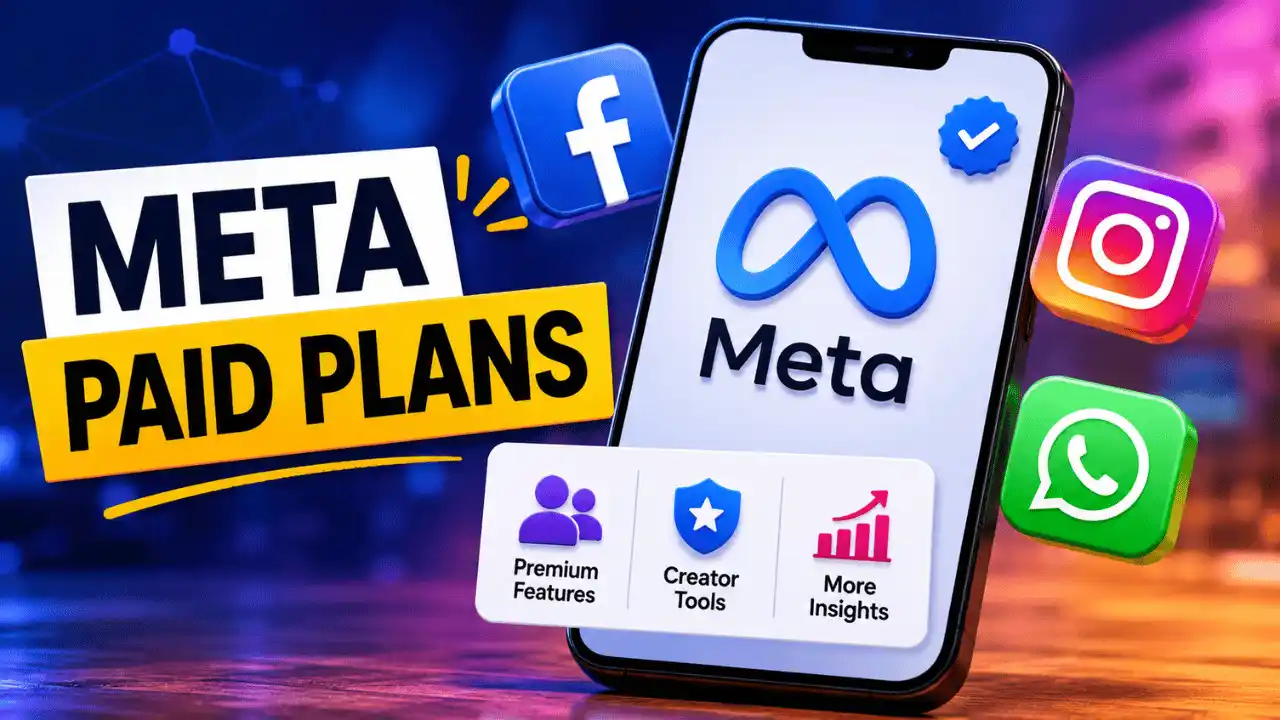

For years, Meta’s revenue story was almost entirely an advertising story. That is changing. On May 27, 2026, the company announced that consumer subscription plans for Instagram, Facebook, and WhatsApp are now being rolled out worldwide, while simultaneously testing a broader suite of paid tiers aimed at creators, businesses, and users who want more from Meta AI. The move signals a deliberate push to diversify income streams well beyond the ad model that built the company.
The Consumer “Plus” Plans
For a modest monthly fee, users can unlock enhanced features across Meta’s flagship apps. Instagram Plus and Facebook Plus are each priced at $3.99 per month, while WhatsApp Plus comes in at $2.99 per month.
Subscribers gain access to perks such as advanced profile customisation, ‘super reactions,’ and deeper insights into Stories. Meta’s head of product, Naomi Gleit, noted that more features will be added over time.
Importantly, these plans are separate from Meta Verified, which remains focused on identity verification, impersonation protection, and premium support.
What Instagram Plus Actually Offers
Instagram Plus is geared particularly toward creators and heavy users. Subscribers gain Story analytics including aggregate rewatch counts, unlimited audience lists for Stories beyond the existing Close Friends feature, weekly spotlighting of a Story for additional visibility, extended Story duration beyond 24 hours, the ability to preview Stories anonymously, searchable viewer lists, and the option to post directly to profile highlights without the content appearing in feeds.
Customisation features include animated ‘Super Heart’ reactions, custom app icons, fonts for bios, and additional profile pins.
Facebook Plus and WhatsApp Plus
Facebook Plus mirrors Instagram’s focus on social expression and audience engagement, while WhatsApp Plus leans into personalisation offering app themes, custom ringtones, premium stickers, additional pinned chats, and list customisation.
Meta One: The AI and Creator Play
Beyond the consumer-level plans, Meta is rolling out a wider subscription architecture under the Meta One brand, which will serve as the umbrella for all its subscription services going forward.
On the AI side, Meta One Plus ($7.99 per month) and Meta One Premium ($19.99 per month) are launching next month in Singapore, Guatemala, and Bolivia. Both plans provide enhanced AI features, but the Premium tier unlocks higher compute capacity for complex queries, deeper reasoning capabilities, and expanded video and image generation. Meta AI will remain free for casual users, but these tiers mirror the paid model structures introduced by other AI providers.
For creators and businesses, testing is underway this week in Saudi Arabia, Morocco, Thailand, and Bangladesh. Meta One Essential at $14.99 per month provides a verified badge, impersonation protection, and enhanced linksheets for cross-platform promotion. Meta One Advanced at $49.99 per month adds boosted visibility in feeds and search, bold Follow buttons on Reels, automatic follow invitations, advanced analytics, scheduling tools, moderator access sharing, and content reuse alerts with credit requests.
The Bigger Strategic Shift
The pricing architecture Meta has designed here is layered by intent. Casual users get free access; anyone who wants more whether that’s creator tools, AI horsepower, or richer personalisation features pays incrementally for it.
By layering subscriptions across consumer, creator, business, and AI segments, Meta is diversifying revenue beyond advertising. With billions of users and limited room for growth in traditional engagement metrics, subscriptions offer a path to extract more value from an existing global audience. Gleit noted that Meta is still in an experimental phase, but the long-term ambition is to unify all offerings under Meta One with continuous updates and expansions.
Whether subscribers follow is a different question. Meta’s platforms have been free for their entire existence, and converting even a fraction of their billions of users into paying customers would shift the economics of the business considerably. The early test markets geographically varied and deliberately selected suggest Meta is moving carefully before any full-scale global rollout.




Leave a Reply
You must be logged in to post a comment.