



It was quiet morning at Sony Pictures Entertainment in LA on 24th November 2014 which was shattered by a chilling digital assault. Computer screens flickered to reveal a menacing red skeletal figure and a stark message: “Hacked By #GOP.” This was not a movie plot; this was the prelude to one of the most devastating corporate cyberattacks in history, perpetrated by a shadowy group that identified itself as the “Guardians of Peace.” In minutes, panic erupted as files became unavailable, systems shut down, and a threatening message appeared on every screen. Sony Pictures was under siege, its data including unreleased movies and private emails compromised and its systems inoperable. The hackers -Lazarus Group were demanding the cancellation of “The Interview” a comedy that mocked North Korea’s leader, setting a chilling precedent of cyberterrorism curtailing free speech.
The audacious attack disrupted Hollywood, but its impact rippled far beyond. Within weeks, US intelligence officials publicly accused North Korea of orchestrating the assault pulling back the veil on a surprise cyber superpower that had quietly emerged from the hermit kingdom: the Lazarus Group.

The Birth of North Korea’s Cyber Army: The Lazarus Group
For observers who have kept their eyes on North Korea, the Sony hack was hardly a surprise. The secretive cyber army, better known as the Lazarus Group or APT38, had been out there hacking for years before the Sony servers melted down. Decades ago, North Korea-albeit plagued by chronic blackouts and limited internet access for its citizens-already began pouring resources into cyber warfare. In the late 1990s, Pyongyang’s military intelligence arm, the Reconnaissance General Bureau, set up dedicated hacking units. One such unit, Bureau 121, formed the home base for the country’s most talented computer experts.
These aren’t underground hacktivists. These are hand-picked highly trained officers who enjoy special status in North Korean society. Identified as teens for their aptitude, they attend elite institutions like the University of Automation in Pyongyang spending five years learning how to infiltrate computer systems. Those who excel join Bureau 121 and become part of a pampered elite receiving luxurious apartments, cash bonuses, and praise from the regime.
To North Korea’s leaders, cyber warfare is the perfect weapon. As one defector explained, “the strongest weapon is cyber. In North Korea, it’s called the Secret War.” With a small team of genius-level hackers, Pyongyang can strike rich nations in cyberspace without firing a shot.
Escalation in Aggression: Attacks on South Korea
In the mid-2000s, the regime began deploying many of these operatives abroad, expanding their reach. Intelligence reports suggested North Korean hacker teams quietly moved into countries such as China operating from cities undercover. Working abroad gave them better internet access and a layer of deniability.
Starting from 2009, this cyber army began making its presence felt. South Korea’s government and media networks were hit by waves of attacks: websites defaced, data wiped, city-wide outages. One early operation, code-named “Operation Troy” (2009-2012), deployed malware to spy on South Korean military networks.
The year 2013 was one of bold escalation. On a dark day in March, the networks of several South Korean banks and television broadcasters suddenly crashed. ATMs froze; news broadcasts went silent. The attack-which would later be dubbed “Dark Soul”-knocked out tens of thousands of computers. At the time, South Korean officials traced the breach to the North’s cyber units, a clear signal that Pyongyang could disrupt a modern economy at will.
The $81 Million Heist: Bangladesh Bank Under Siege
The most daring cyber-heist of all time was conducted by the Lazarus Group in February 2016. One Friday evening in Dhaka, Bangladesh, the head office of Bangladesh Bank, the central bank of the country, was quiet. Deep inside the bank’s network, unseen and unfelt, intruders were at work. For weeks, hackers had been lurking in the bank’s computer systems, spying and preparing. Now, they initiated their endgame.
At the New York Federal Reserve, where Bangladesh Bank held an account, a series of urgent payment requests arrived via the secure SWIFT network. These messages, complete with valid Bangladesh Bank codes, told the Fed to transfer almost one billion dollars from Bangladesh’s reserves to accounts in the Philippines, Sri Lanka, and beyond. In Dhaka, a single printer, relied on to automatically record SWIFT transactions, suddenly stopped working-a hacker ploy to delay the alarm.
It would be Monday before bank staff realized that the printer’s malfunction had not been an accident. Long before then, $81 million was gone from Bangladesh’s account, the target of a successful theft. The money vanished into casinos and accounts in the Philippines, then went cold. Part of a huge sum from one of the world’s poorest countries was gone.
The investigation that followed read like a global whodunit. Bangladeshi and US officials working together soon found fingerprints from the Lazarus Group in the code and methods used. The audacity and scale of the hack pointed to a state-sponsored operation—a bank robbery perpetrated by a government.
Chaos Caused by WannaCry Ransomware Globally

The Bangladesh Bank heist was a strategic turning point: North Korea discovered that hacking could directly finance its regime. Stealing $81 million beat printing counterfeit bills or illicit arms. Success in Bangladesh emboldened Pyongyang. Over the next few years, cyber units linked with North Korea-often dubbed APT38 when it comes to financial hacks-went after banks in Vietnam, Taiwan, India, Mexico, and more. They took advantage of the global banking system’s connectivity to steal tens of millions at a time, each attempt showing their growing finesse in navigating financial systems.
The 2017 WannaCry ransomware attack took things to yet another level. In May that year, computers at more than 150 countries were suddenly locked by malware displaying this message: “Oops, your files have been encrypted!” It hit hospitals in the UK, shipping companies, railway systems, and universities. The worm spread unselectively, infecting more than 300,000 machines.
It was eventually traced back to North Korea, effectively making it an irresponsible cyber weapon that downed hospital systems and businesses around the world. WannaCry caused massive financial damage and exposed just how vulnerable critical infrastructure was, with surgeries even cancelled because of PCs being down at hospitals.
But beyond that, North Korean hackers have silently diverted astronomical sums to Pyongyang through cryptocurrency thefts. In one incident, over half a billion dollars vanished overnight from a Japanese cryptocurrency exchange. In another, about $600 million was stolen from the crypto network of an online game. Experts now believe that a significant portion of North Korea’s missile program funding comes from stolen cryptocurrency. That is to say, when North Korean hackers steal digital coins, they may well be paying for the country’s next ballistic missile.
The Lazarus Playbook: Inside North Korea’s Cyber Operations
How do North Korean hackers manage these feats? Their operations follow a certain playbook, a blend of social engineering and coding.
Initial Access:
It often begins with a deceptive email. A banker or employee at a targeted organization might receive what looks like a routine message—a job application, an invoice, or an urgent security update. Hidden inside is a malicious link or attachment. One careless click and the hackers quietly gain a foothold. This tactic, known as spear phishing, is their favorite door in.
Network Infiltration:
Once inside a network the intruders will move stealthily. They might spend days or weeks mapping out the system, increasing their privileges and finding the sensitive “keys to the kingdom” that is the servers managing money transfers in a bank or the file servers with emails and film cuts in a movie studio.
Malware Deployment:
The hackers install custom malware essentially spy programs in order to communicate back to their controllers and even destroy data if needed. In some cases they use hidden backdoors to ensure they can slip back in even if part of their malware is discovered and removed.
Data Exfiltration & Financial Transfer:
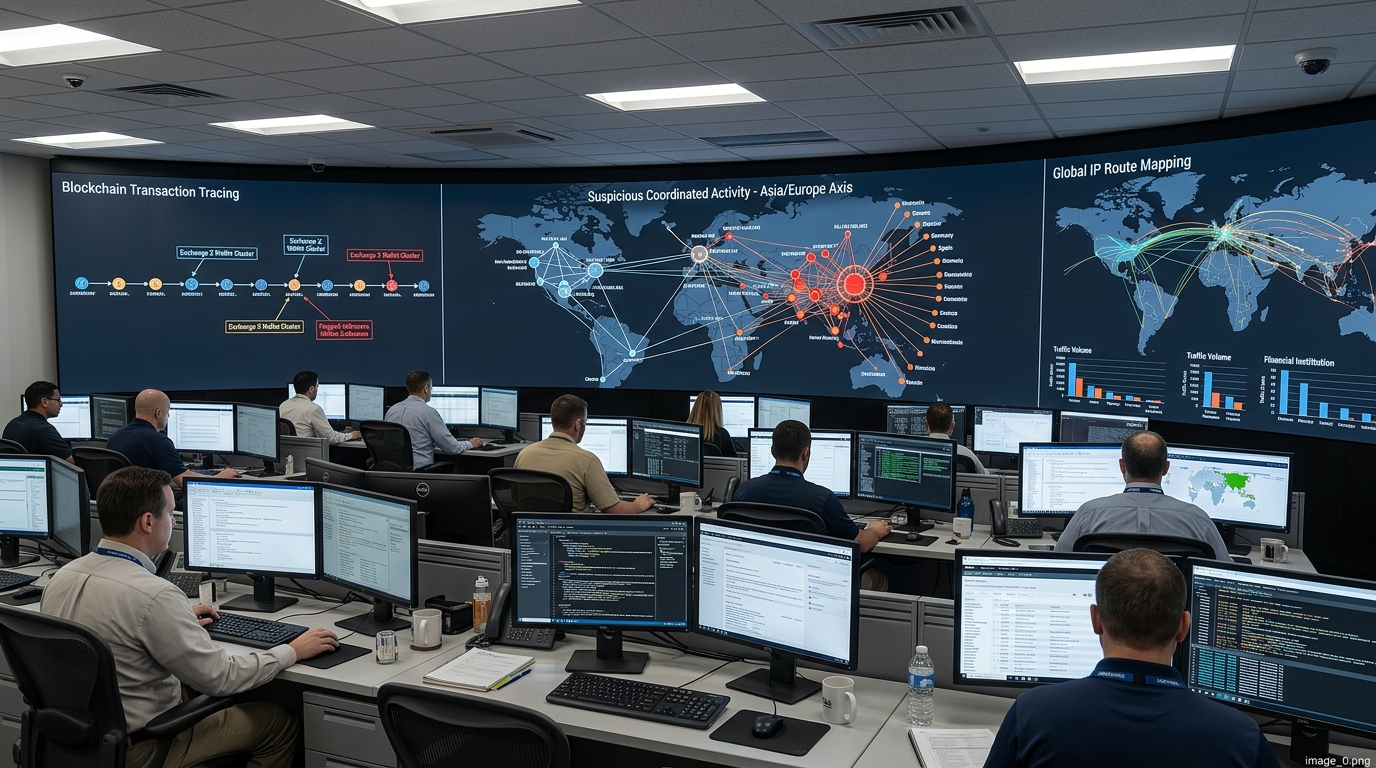
When it comes to stealing data or money they cover their tracks very well. Stolen files are encrypted and sent in small chunks to external servers so they won’t be noticed. Stolen money, especially cryptocurrency is laundered through a maze of accounts. They might split the loot into thousands of smaller transactions, bouncing them through different digital wallets and mixers—services that obscure the origin of funds.
Anonymity & Deniability:
By the end, it becomes extremely difficult for investigators to trace the funds as North Korean. They essentially wash the money through cyberspace and then convert it to cash or goods for the regime. Each attack is like a covert mission, and like any good spies, the hackers communicate via encrypted channels and route their connections through multiple countries to hide their origin. They operate mostly from North Korea and some bases in China, but they’ll bounce their internet traffic through hacked servers on other continents, making attribution painstaking.
The New Cold War: A World Under Digital Threat
Despite their best efforts to mask their identity, the Lazarus Group’s exploits have developed a signature that cyber analysts can now recognize. These breadcrumbs have allowed experts to attribute many seemingly unrelated cyber incidents to the same North Korean actors. The real-world consequences of North Korea’s cyber campaigns have been profound. The Sony hack financially damaged a corporation, leading to millions in losses and creatively stifling an entire industry. It forced an industry to wake up to the reality that a dictator’s displeasure could become a digital sword hanging over free expression.

The bank heists triggered alarms in the finance world, with banks worldwide rushing to shore up their security and examining how national central banks could be so vulnerable. The incident forced changes in how banks handle SWIFT transfers. The WannaCry ransomware attack linked to North Korea caused massive financial damage globally and exposed the vulnerability of critical infrastructure and even put lives at risk.
All these actions have prompted a worldwide manhunt. Cybersecurity agencies, law enforcement, and private companies are collaborating as never before to stop these hacks and hold the perpetrators responsible.
The US Department of Justice has indicted North Korean hackers, publicly naming members of the Lazarus Group in an effort to hold them accountable.
Governments have issued sanctions against entities and individuals tied to the group, trying to freeze whatever assets or travel abilities they have outside North Korea.
Cryptocurrency exchanges and banks have been urged to tighten monitoring so that stolen funds can be flagged or seized.
Still, the core members of this hacker unit remain safely out of reach, behind North Korea’s borders. Indictments and sanctions, while sending a message, have not stopped the attacks. Pyongyang’s hackers have grown bolder because cyber operations have become a lifeline for the regime’s finances.
When we look into the future, North Korea’s hacker army forces us to reckon with an unsettling truth that is the nature of warfare and crime has changed. A country that struggles to keep its lights on can black out someone else’s. A nation with a tiny economy can steal millions from the world’s biggest banks. A regime that might not win a conventional battle can still wreak havoc across the globe, all through the internet. This reality has not gone unnoticed by other nations. Today, dozens of countries have cyber units, and global rivalries are extending into the digital domain.
What North Korea has done is a dramatic example of a broader trend: cyber warfare is the new great equalizer, allowing small players to hit far above their weight. The prospect of a cyber arms race raises tough questions: How do we defend against attacks that can come at the speed of light, with no warning, from unseen perpetrators? What constitutes an act of war in cyberspace? There are no clear rules yet. In Pyongyang, cyber operations are celebrated internally; the hackers are heroes to the regime. No one outside will ever know his name or see his face, but his keystrokes can shake nations. It’s a form of power that was science fiction just a few decades ago.
The world has entered a new kind of Cold War, fought with code. The hackers of Pyongyang have proven you don’t need to be a superpower to be a threat in this domain.




Leave a Reply
You must be logged in to post a comment.