



African AI filmmaking is moving from experiment to mainstream conversation, as producers across the continent test artificial intelligence tools to cut costs and expand creative possibilities. The shift comes as financing gaps and weak infrastructure continue to hold back African cinema’s growth.
A Coming-of-Age Story Built Around AI
A new film called Makemation captures this moment well. The story follows 17-year-old Zara Sodangi, a struggling teenager from a Lagos neighbourhood who earns a spot at a prestigious fictional tech academy. Her journey through elite technology education, financial pressure, and self-doubt forms the heart of the plot.
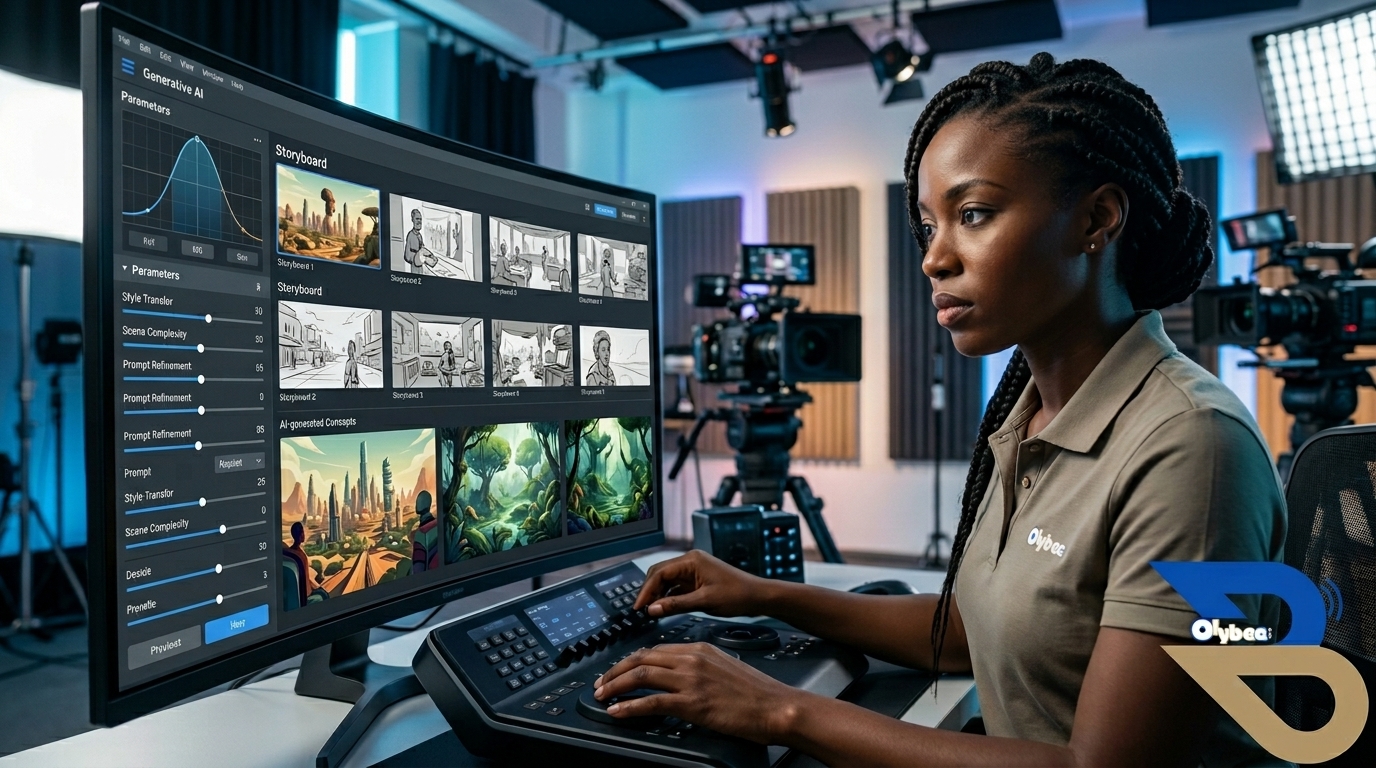
Producers describe Makemation as Africa’s first AI-themed feature film. The project doesn’t just explore artificial intelligence as a topic. It actually blends generative AI tools into the production process itself, alongside traditional live-action filmmaking.
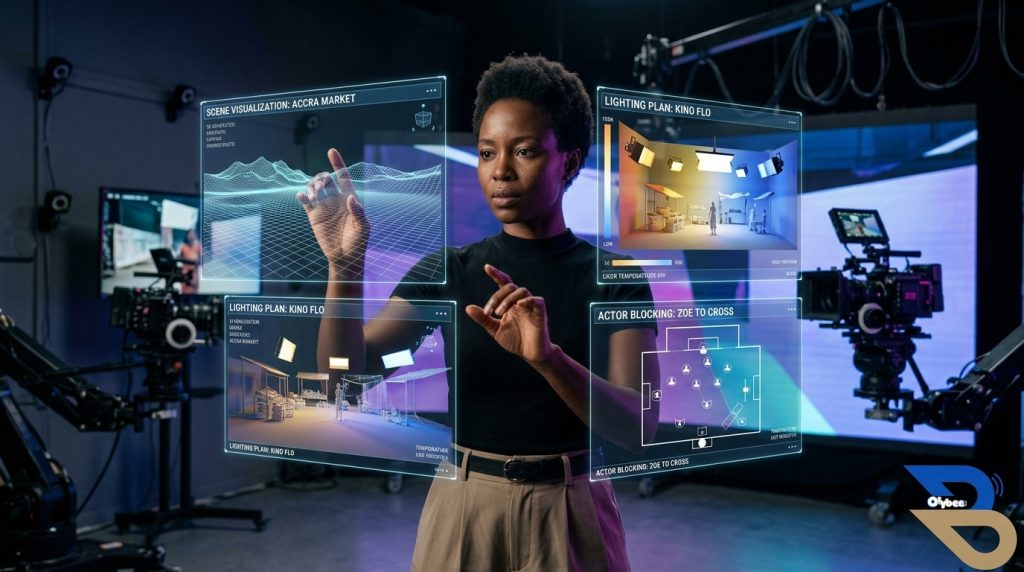
The crew used high-end equipment for the shoot, including Arri Alexa LF camera systems, CGI, holograms, and advanced visual effects work. That level of technical ambition is typically reserved for much larger production markets outside Africa.
Why African Filmmakers Are Turning to AI Tools
Africa’s film and audiovisual sector already supports more than five million jobs and generates close to $5 billion every year, according to UNESCO. Yet much of that industry still runs on thin budgets and limited equipment.
Visual effects work remains especially costly across many African markets. Productions often outsource advanced post-production abroad, or simply scale back their creative ambitions to fit available budgets.
Analyst Kenim Oba argues this imbalance reflects a deeper structural issue. She points out that Hollywood’s dominance came not from superior storytelling but from building and controlling an entire production system. Africa, she says, lacks access to that same “production intelligence,” meaning the technical infrastructure and industrial knowledge needed to turn stories into scalable commercial products.
Nollywood has long pushed past these limits anyway. Nigeria’s Federal Ministry of Art, Culture, Tourism, and the Creative Economy reports that the country produces thousands of films yearly through a fast, low-cost model. That output helped Nollywood become one of the world’s largest film industries by volume.
Oba believes AI now offers a new way forward. Filmmakers can generate concept art, storyboards, and prototype worlds before securing major funding. That matters in markets where investors have historically demanded expensive proof-of-concept material before committing capital. Instead of describing a vision, creators can now show one directly.
AI-powered subtitling and dubbing tools could also help African films travel more easily across the continent’s many languages, including English, French, Arabic, Portuguese, Swahili, and Hausa. Streaming platforms are increasingly hungry for localised content, making this kind of technology more valuable by the day.
In Nigeria, the Naija Artificial Intelligence Film Festival launched in 2025 and drew hundreds of submissions from multiple countries. The event signals growing momentum behind AI-generated storytelling and hybrid animation techniques on the continent.
Global Debate Meets African Pragmatism
The global conversation around AI in film looks very different. At the 2026 Cannes Film Festival, running from May 12 to May 23, filmmakers and studios remain split over how far generative AI should go in cinema. Much of that debate centers on authorship, labour displacement, and copyright protection.
Actress and producer Demi Moore addressed the topic during the festival’s opening, suggesting that resisting AI entirely is a losing battle, and that finding ways to work alongside it makes more sense.
African filmmakers, however, are approaching AI from a different economic starting point. Many aren’t trying to protect an existing studio system. They’re trying to scale production quality despite ongoing financial and technical constraints.
Beyond production itself, entrepreneurs are also applying AI to marketing. Grace Olubiyo, founder of CR8US AI, believes weak audience targeting, not weak scripts, explains why many African films underperform. Her platform analyzes audience behaviour and release timing to help filmmakers reach the right viewers, without touching the creative work itself.
A New Model, With New Risks
Oba cautions that this shift carries real dangers too. African aesthetics, mythology, and storytelling traditions could be absorbed into global AI systems without African creators owning the platforms or intellectual property involved. For her, the goal isn’t simply visibility. It’s ownership of the systems that create that visibility in the first place.
As AI tools continue spreading through African creative industries, the question of who controls the technology may matter just as much as how the technology gets used.





Leave a Reply
You must be logged in to post a comment.