




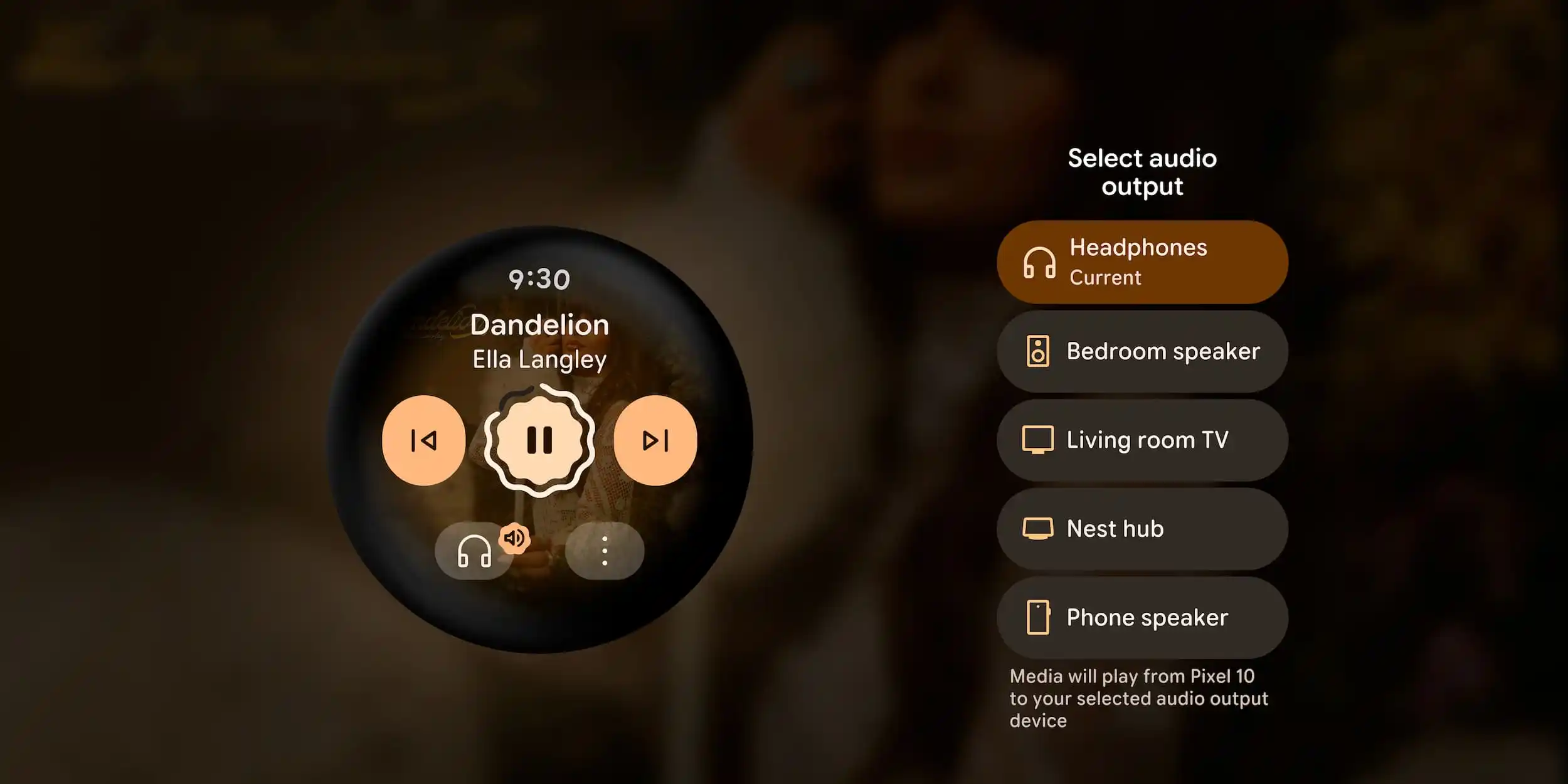
The Wear OS 7 launch is officially underway, bringing one of the biggest smartwatch software upgrades Google has shipped in years to Pixel Watch owners. Google’s Wear OS 7 update started rolling out today for the Pixel Watch 2, 3, and 4, adding a new Live Updates feature that tracks live events from Android smartwatches. The update offers improved battery life and better integration with connected devices, letting people track real-time updates directly on their wrist and manage media across speakers and headphones with ease.
Live Updates and a Battery Boost Headline the Wear OS 7 Launch
Live Updates will now sync with Wear OS devices, so updates like sports scores or an ongoing meal delivery show up on both the watch and the phone. Similar to the live information cards Android phone users already see, the feature now comes to the wrist, meaning people don’t need to keep opening apps every time they want to check a score or a delivery’s status.
Battery life was one of the most consistent complaints about earlier Wear OS generations, and Google says it’s made real progress here. Google claims Wear OS 7 offers up to 10 percent more battery life than Wear OS 6. That gain comes through deep system-level power optimizations across display wake time, background sensors, radios, and app polling the kind of small efficiency wins that, in aggregate, can be the difference between finishing the day with confidence and switching to battery saver before dinner.
Pixel Watch Buying Guide: Which Model Is Right for You? →
Wear Widgets, Connected Devices, and What’s Coming Later
The new Create My Widget function lets users build custom dashboards, known as Wear Widgets, using natural language via Gemini Intelligence. These flexible 2×1 and 2×2 widget layouts replace the older full-screen Tiles system that Wear OS has used for years.
Connected-device control has also been expanded significantly. Wear OS 7 now lets users control earbuds or Google’s Android XR smartglasses launching later this year taking a photo with the glasses, for instance, allows instant review on a Pixel Watch, alongside control over what’s playing on headphones, home speakers, and other connected audio devices.
Gemini Intelligence itself, however, isn’t arriving immediately. Gemini will eventually power multi-step automation, letting users reserve a spin class or place a restaurant order using natural language, alongside a new “Neural Express” design language offering suggestions based on chat, Gmail, and search histories. But those Gemini-powered experiences are scheduled to arrive on select supported devices later this year rather than as part of today’s rollout.
The hardware story behind that delay is notable. The chip expected to enable Gemini on the wrist is Qualcomm’s Snapdragon Wear Elite, announced at Mobile World Congress in March 2026 the first wearable chip with a dedicated Hexagon NPU capable of running AI models with up to two billion parameters directly on the device at up to ten tokens per second, with no phone or cloud dependency. The Pixel Watch 5 is expected to launch alongside the Pixel 11 around August 2026, and is the most likely candidate to be the first Pixel device equipped with that chip.
Android 17 Update: What’s New Across Phones and Watches →
Who’s Getting Wear OS 7 First
According to Google, more than half of Wear OS users wear their watches every day of the week, with many keeping them on for more than 23 hours per day context that underlines why Google is pushing so hard on always-on usefulness rather than flashy one-off features. Wear OS 7 is rolling out now to eligible Pixel Watch models, with broader device support and the promised Gemini features expected to follow through the rest of the year. Full release notes are available via Google’s official Wear OS announcement.








Leave a Reply
You must be logged in to post a comment.